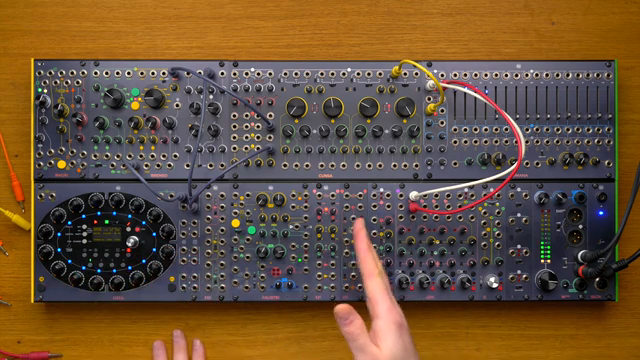
Frap Tools, the Italian maestros of modular design, return with a patching technique that brings together their Cunsa and Fumana modules for a stereo experience that’s both wide and precise. In this video, Giovanni demonstrates how to spread a mono signal across the stereo field while keeping the low end firmly anchored in the centre—a trick that’s as practical as it is sonically satisfying. The approach leans on Fumana’s odd/even band outputs and Cunsa’s flexible filtering, showing how these modules interact to sculpt a mix-ready sound. Expect a deep dive into filter routing, modulation, and the sort of patch logic that makes modular so addictive.
29. January 2025
MILES
Frap Tools: Crafting Dynamic Stereo with Cunsa and Fumana
Frap Tools 321, Frap Tools Brenso, Frap Tools CGM, Frap Tools Cunsa, Frap Tools Fumana
From Mono Roots to Stereo Canopy
The video opens with Giovanni at Frap Tools introducing a patch that’s been simmering in his mind since the early days of Fumana. The core idea is to use Fumana’s odd and even band outputs to create a stereo spread from a mono bassline, a technique now fully realised thanks to the addition of Cunsa’s four flexible filters. The initial sound source is a robust, overtone-rich bass, with Cunsa’s filter set to 12 dB per octave to preserve those upper harmonics. There’s mention of adding extra crispness via Cunsa’s cube function, but the real focus is on what happens when this signal is routed through Fumana.
Once patched, Fumana’s odd and even outputs are hard-panned left and right, instantly delivering a wide stereo effect. Giovanni notes that these outputs are intentionally voiced with a slightly brighter character compared to the summed output, adding subtle nuance to the spread. While this hard panning is pleasing in the upper frequencies, it can leave the low end feeling unfocused—a problem for anyone wanting a bassline that sits solidly in the mix. This sets up the need for a more refined approach, with Cunsa stepping in to help rein in the stereo field where it matters most.
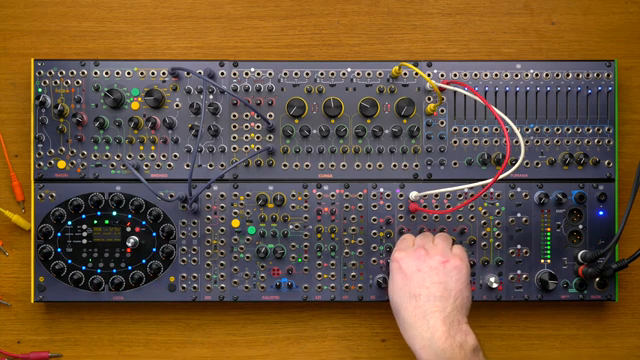
"This is an effect that I really really love, especially considering that these outputs here are slightly, I'm talking about 1 dB, slightly brighter than this one because they have more, they don't have a very gentle shelf on the upper range that this one has, so we did that on purpose to provide even more nuances."
© Screenshot/Quote: Fraptools (YouTube)
Cunsa: The Filtered Crossfader
Cunsa’s role in this patch is to act as a dynamic crossfader between stereo width and mono solidity. Giovanni explains how he uses three of Cunsa’s filters: two in high-pass mode for the odd and even Fumana bands, and one in low-pass mode for the summed output. By setting the cutoff frequencies of all three filters to roughly the same point, he’s able to blend the stereo and mono elements, effectively controlling where the signal transitions from wide to centred.
The process involves patching the odd and even outputs into Cunsa’s second and third filters, each set to high-pass at 12 dB per octave, and routing them to the stereo channels of the CGM mixer. The summed output (or a copy from Brenso) is sent through the first filter in low-pass mode, also at 12 dB per octave, and then to another mixer channel. This arrangement allows for precise balancing: the high frequencies can remain wide and lively, while the low end is kept punchy and mono, ideal for a bassline that needs to cut through a mix without smearing across the stereo field.
Tightening the Low End: Filtering and Mixing in Practice
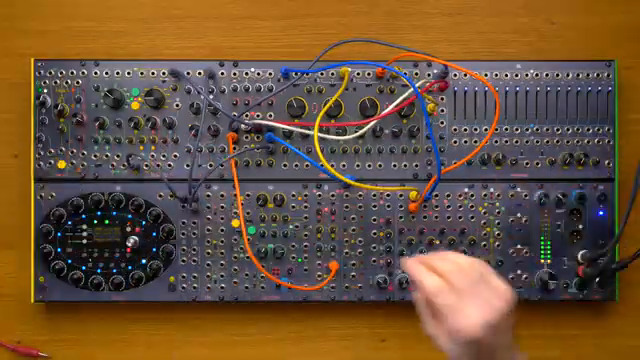
"By doing so we are able to define when the track becomes mono and when it becomes stereo."
© Screenshot/Quote: Fraptools (YouTube)
With the filters in place, Giovanni demonstrates how adjusting the cutoff and resonance shapes the overall sound. He keeps the Q moderate to avoid overemphasising the cutoff point, aiming for a natural blend rather than a resonant peak. Driving the low-pass filter a little harder can add extra punch to the bass, while closing the filter tightens the low end further, keeping it focused and central in the stereo image. The result is a mix that retains a lush, expansive top end without sacrificing the mono integrity of the bass.
He also introduces an external offset from the 321 utility module, patching it into the filter chain to further refine when the track shifts between mono and stereo. Care is taken to isolate this offset from the fourth filter, which is reserved for melodic content, ensuring that only the processing chain is affected. This level of control allows for nuanced transitions and precise definition of the stereo field.
For added timbral variety, Giovanni suggests swapping the input signal—using, for example, a square or pulse wave—to feed filter one. This approach lets different sections of a track be perfectly centred or spread out as needed, demonstrating the flexibility of the setup for both static and evolving arrangements.
Modulation: Breathing Life into the Spread
The final section explores modulation options to animate the stereo field. Instead of relying solely on static offsets, Giovanni patches in an LFO or even a fluctuating random voltage—possibly from Sapèl—to modulate the filter parameters. This injects movement and unpredictability, making the stereo spread dynamic and organic rather than fixed.
By leveraging these modulation sources, the patch gains a sense of evolution, with the stereo image and timbre shifting over time. The video closes with Giovanni reflecting on how well Cunsa and Fumana complement each other in this context, inviting viewers to experiment further and share their results. It’s a fitting end for a patch that’s all about interaction and creative control.
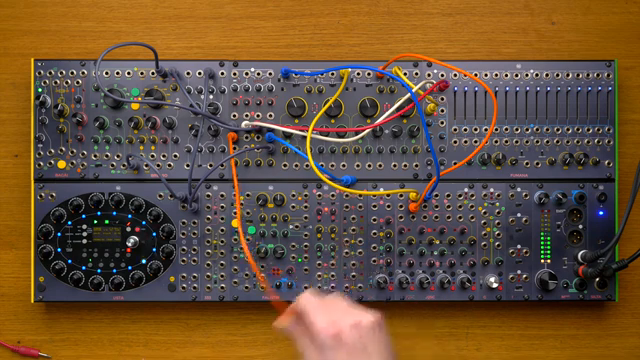
"We can create an LFO or even use bug eyes fluctuating random voltage to add some degree of variation to this patch."
© Screenshot/Quote: Fraptools (YouTube)
This article is also available in German. Read it here: https://synthmagazin.at/frap-tools-dynamische-stereo-magie-mit-cunsa-und-fumana/
Watch on YouTube:
Latest articles
Watch on YouTube:
Visit the channel:
https://www.youtube.com/FrapTools
https://www.youtube.com/FrapTools
Links from FrapTools:
website: https://frap.tools
instagram: https://instagram.com/fraptools
facebook: https://www.facebook.com/fraptools
twitter: https://twitter.com/fraptools
soundcloud: https://soundcloud.com/fraptools
Sponsored links:
If you purchase via these links, we may earn a small commission – at no extra cost to you. The link opens an Amazon keyword search, and results may vary depending on availability.
Frap Tools 321
🔗 Check price on Amazon
🔗 Check price on Amazon
Frap Tools Brenso
🔗 Check price on Amazon
🔗 Check price on Amazon
Frap Tools CGM
🔗 Check price on Amazon
🔗 Check price on Amazon
Frap Tools Cunsa
🔗 Check price on Amazon
🔗 Check price on Amazon
Frap Tools Fumana
🔗 Check price on Amazon
🔗 Check price on Amazon