Expressive E’s latest creative tutorial puts the Osmose front and center as both a standalone synth and a deeply expressive MPE controller, with neoclassical producer Tonnerre guiding us through the sound design and production techniques that shaped his album “Komorebi.” The video is a masterclass in translating nuanced finger gestures into organic textures, evolving pads, and intricate SFX—whether using Osmose’s own engine or harnessing its MPE prowess in Ableton Live. From pressure-driven soundscapes to real-time modulation of soft synths and samplers, this episode is a goldmine for anyone interested in digital instrument architecture, expressive MIDI workflows, and the practical realities of integrating next-gen controllers into modern production. If you’re curious about how expressive hardware can transform both your synth and DAW experience, this is essential viewing.
26. September 2024
LYRA
Expressive E Osmose: Redefining Expressivity in Digital Production Workflows
Sonic Identity: Osmose as Tonnerre’s Creative Engine
The video opens with neoclassical producer Tonnerre introducing his approach to blending electronic and acoustic elements, with the Osmose as a central tool in shaping the sound identity of his album “Komorebi.” He describes how the instrument’s unique capabilities allowed him to infuse his tracks with storytelling and motion, moving beyond traditional piano and synth textures. This isn’t just about layering sounds; it’s about sculpting entire atmospheres where each gesture on the keybed translates into evolving timbres and organic transitions.
Tonnerre’s workflow is deeply intertwined with the Osmose’s built-in sounds, which he leverages for pads, sparkly textures, and transitional effects. The focus is on using the instrument as both a compositional and sound design tool, with its responsiveness enabling him to create nuanced, narrative-driven arrangements. The result is a sonic palette that feels both intimate and expansive, setting the stage for the detailed demonstrations that follow.
The Keybed: A Playground for Expressivity
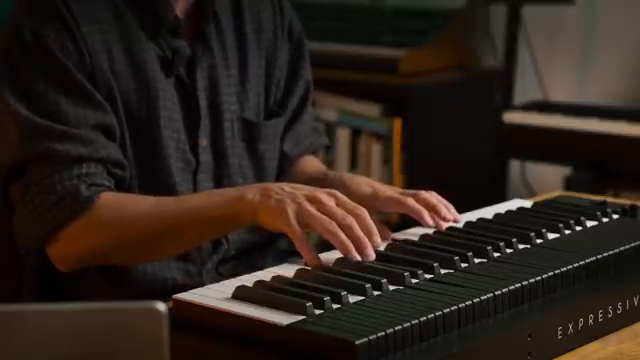
One of the Osmose’s defining features is its highly sensitive keybed, which Tonnerre explores in depth. Each key responds to subtle variations in pressure, allowing for dynamic control over volume, timbre, and even triggering release sounds. This opens up a spectrum of performance possibilities, from gentle pads that swell under the fingertips to percussive, glimmering textures that emerge from rapid, light touches.
Tonnerre demonstrates how this expressivity isn’t just theoretical—it’s integral to his process. By varying pressure and attack, he morphs presets like “Lydie” from soft pads to magical, sparkling effects, and uses the keybed’s sensitivity to create blooming, evolving motions that would be impossible on a standard keyboard. The tactile feedback and real-time modulation empower him to shape each note’s envelope and character directly, making the instrument feel like an extension of his creative intent.
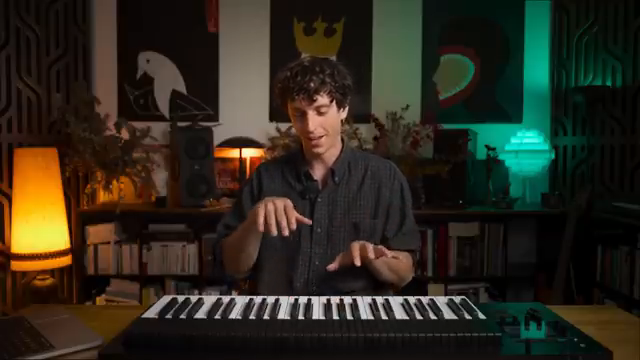
"When I play this pad, I just apply varying amounts of pressure in each key, and make the sound evolve through time, just with the pressure of my fingers."
© Screenshot/Quote: Expressivee (YouTube)
Creative Workflows: Sound Design and MPE Integration
"You can hear there's so much amplitude to the sound, you can go from something very small to something very wide."
© Screenshot/Quote: Expressivee (YouTube)
Tonnerre’s production techniques highlight the Osmose’s versatility as both a standalone synth and a powerful MPE controller. He showcases how built-in presets like “Dirty OSC Pad,” “Balancing Spray,” and “Crackling Things” can be transformed into organic soundscapes, SFX, and evolving textures simply through nuanced finger movements. Layering takes, modulating effects, and exploiting the stereo field, he crafts immersive environments that blur the line between sound design and composition.
The workflow extends seamlessly into the digital realm. Tonnerre details the process of configuring Osmose as an MPE controller in Ableton Live, emphasizing the importance of correct MIDI setup and the creative potential unlocked by pairing Osmose with MPE-ready plugins like Noisy 2 and Meld. He demonstrates how expressive gestures—pressure, aftertouch, pitch bends—can be mapped to software parameters, enabling real-time modulation of synths, samplers, and even non-MPE devices via Ableton’s Expression Control.
A particularly compelling aspect is the use of Osmose’s onboard MPE arpeggiator and Pressure Glide features, which can now be routed to external instruments thanks to firmware updates. This allows for advanced performance techniques—like aftertouch-controlled octave shifts and ratchets—directly from the hardware, streamlining creative automation and deepening the integration between physical gesture and digital sound manipulation.
Organic Arrangements: Pressure Sensitivity as a Creative Force
Throughout the tutorial, Tonnerre emphasizes how pressure sensitivity transforms arrangement strategies. By mapping pressure and aftertouch to key parameters—volume, filter cutoff, brightness—he injects life and unpredictability into both hardware and software sounds. This approach yields arrangements that breathe and evolve, with each performance capturing subtle variations and organic movement. The result is a production style that feels less programmed and more alive, leveraging MPE’s full expressive potential to craft complex, emotionally resonant soundscapes.
Standalone and Controller: Expanding the Creative Horizon
The video concludes by underscoring the dual nature of the Osmose: it excels as a standalone synthesizer with a rich internal engine, but its true power is unlocked when used as an MPE controller in a modern DAW environment. Tonnerre’s examples with Ableton’s stock devices, Noisy 2, and Expression Control illustrate how easily the Osmose can slot into diverse production setups, from DAWless jams to intricate studio sessions.
Expressive E’s presentation makes clear that the Osmose is more than just a novel keyboard—it’s a bridge between tactile performance and digital flexibility. For producers and sound designers seeking to push beyond static MIDI data and embrace a more nuanced, gesture-driven workflow, this tutorial offers both inspiration and practical guidance on integrating expressive hardware into contemporary music-making.
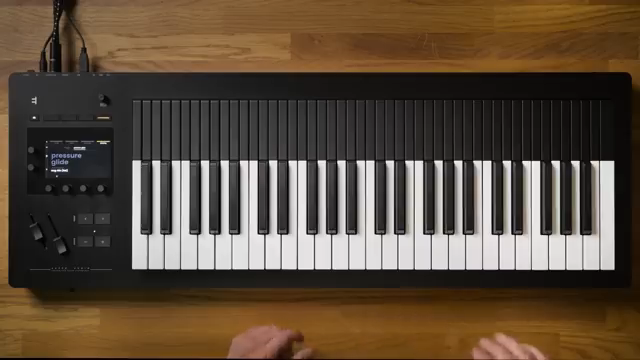
"Any parameter in Live which is mappable can be controlled with the slide and with the press from the Osmos."
© Screenshot/Quote: Expressivee (YouTube)
Watch on YouTube:
Latest articles
Watch on YouTube:
https://www.youtube.com/ExpressiveE
Links from ExpressiveE:
Sponsored links:
If you purchase via these links, we may earn a small commission – at no extra cost to you. The link opens an Amazon keyword search, and results may vary depending on availability.
🔗 Check price on Amazon