Expert Sleepers, long known for bridging modular and digital workflows, brings their Spectral Conquest algorithm to the Disting NT. This update, rooted in their classic VST, arms Eurorack users with a suite of FFT-based spectral tools. From frequency shifting that shatters harmonics to combs, sieves, and a full-blown spectral polysynth, the module transforms audio in ways both clinical and clangorous. We dive into the video walkthrough to see how these spectral processes behave in real-world patching, and what new territory they open for modular sound design.
5. February 2026
MILES
Expert Sleepers Disting NT: Spectral Conquest – FFT Mayhem in Modular
Spectral Conquest Arrives: FFT in the Rack
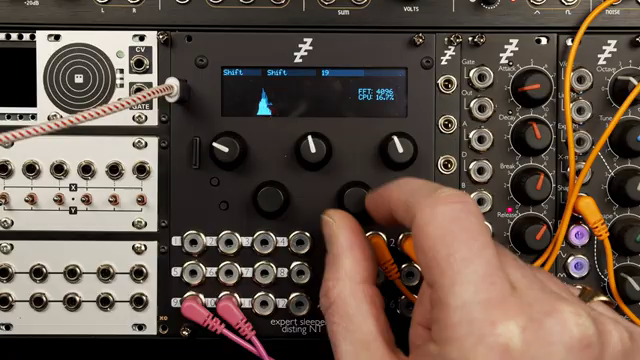
With firmware 1.14, Expert Sleepers introduces the Spectral Conquest algorithm to the Disting NT, transplanting a decade-old VST concept into the Eurorack ecosystem. The core of this algorithm is FFT-based spectral manipulation, giving modular users access to digital audio analysis and transformation typically reserved for software. The video opens with a quick patch-in and a look at the UI, which provides real-time spectrum analysis so users can see exactly how their audio is being dissected and reassembled. Adjustable FFT size and sample rate settings allow for balancing CPU load and bandwidth, though the video skips deep dives into these parameters. The focus is squarely on what spectral processing can do to incoming audio, setting the stage for a tour through a series of transformative effects.
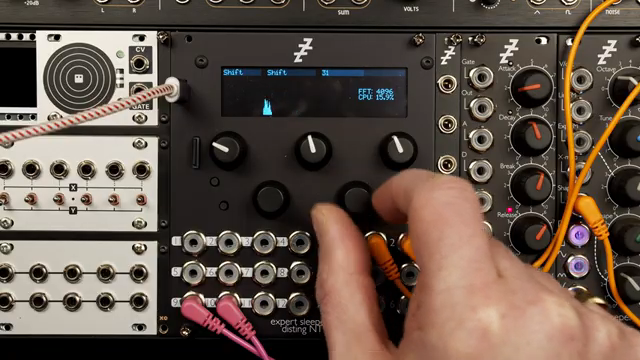
"It shows you a spectrum analysis of the resulting signal, so you can see what you're doing to it."
© Screenshot/Quote: Expertsleepersltd (YouTube)
Shifts, Gates, Combs, and Sieves: The Spectral Toolkit
"It's not pitch shifting, it's frequency shifting. And it's only in increments of FFT bins."
© Screenshot/Quote: Expertsleepersltd (YouTube)
The first stop is spectral shift, a process that moves frequency content up or down by FFT bins—distinct from pitch shifting, as it disrupts the harmonic relationships within sounds. Applied to a piano, this yields clangorous, bell-like textures, while the reverse function flips the spectrum, turning low frequencies into piercing highs. The effect is especially dramatic on drums, where bass energy is catapulted into the upper registers, resulting in unusual and sometimes abrasive timbres.
Next, the spectral gate introduces threshold-based filtering, letting only frequency bins above or below a set level pass through. This can isolate loud transients or, conversely, preserve only the quieter spectral components, offering precise control over which parts of the signal survive. The comb filter, meanwhile, uses step, width, and offset controls to carve out repeating patterns in the spectrum, producing effects reminiscent of flangers or phasers but with a distinctly digital edge. Finally, the sieve algorithms—harmonic and chordal—act as resonators, allowing users to emphasize specific harmonics or chord tones. The chord sieve even lets you blend in intervals and choose the number of octaves, resonating with particular keys or notes for targeted spectral reinforcement.
Performance Playgrounds: Real-Time Harmonic Manipulation
The polysynth mode takes the sieve concept further, transforming the Disting NT into a playable instrument. Here, MIDI, CV/gate, or I2C can be used to trigger notes, with the module generating FFT-based resonances for each held chord. Full polysynth logic is on offer, including transposition, fine-tuning, microtuning via Scala files, and envelope shaping. The video demonstrates holding multiple notes and generating chords, with automatic chord generation spanning multiple octaves. The result is a spectral synth engine that can be controlled from a keyboard or sequencer, opening up new possibilities for live performance and generative patching.
Throughout, the module’s real-time controls allow for dynamic manipulation of harmonic content, whether sculpting drones, processing external audio, or building evolving textures. The interplay between spectral processes and traditional modular workflows is highlighted, showing how these tools can inject digital complexity into otherwise analogue patches.
FFT Filters: Brick Walls and Surgical Slices
The final section covers the suite of FFT-based filters, which include low pass, high pass, band pass, and notch types. Unlike analogue filters with gradual slopes, these are described as ‘brick wall’—their frequency cutoffs are absolute, with no gentle roll-off. This precision allows for surgical removal or isolation of frequency bands, though the resolution is limited by the size of the FFT bins, which can result in a somewhat coarse effect. The video demonstrates each filter type, showing how the spectrum is sliced and manipulated in real time.
These FFT filters offer a different flavour of sound shaping compared to traditional filters, excelling at drastic spectral edits rather than subtle tone sculpting. For modular users seeking extreme frequency control or experimental processing, this approach provides a unique addition to the Disting NT’s already formidable arsenal.
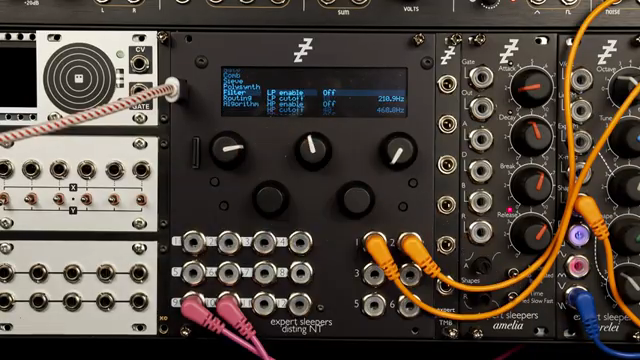
"Given that these are based on FFTs, they're effectively brick wall filters. There's no fall-off, like six dB per octave, 12 dB per octave or anything like that. It's absolutely exact."
© Screenshot/Quote: Expertsleepersltd (YouTube)
This article is also available in German. Read it here: https://synthmagazin.at/expert-sleepers-disting-nt-spectral-conquest-fft-chaos-im-modularsystem/
Watch on YouTube:
Latest articles
Watch on YouTube:
Visit the channel:
https://www.youtube.com/ExpertSleepersLtd
https://www.youtube.com/ExpertSleepersLtd
Links from ExpertSleepersLtd:
Sponsored links:
If you purchase via these links, we may earn a small commission – at no extra cost to you. The link opens an Amazon keyword search, and results may vary depending on availability.
Expert Sleepers disting NT
🔗 Check price on Amazon
🔗 Check price on Amazon