Elektron, the Swedish powerhouse of performance-centric grooveboxes and synths, dives deep into digital territory with Grainer—the brand new granular machine for Tonverk, introduced in OS 1.1.0. In this official walkthrough, Risa T. methodically dissects Grainer’s architecture, revealing a tool that transforms samples into intricate textures, evolving pads, and rhythmic curiosities. The video is less about preset surfing and more about granular fundamentals: polyphony, play modes, parameter interplay, and how these digital grains can be wrangled into musical form. If you’re curious about how Elektron’s latest engine fits into your workflow, this is a must-watch breakdown.
27. November 2025
LYRA
Elektron Unleashes Grainer: A Granular Playground in Tonverk OS 1.1.0
Grainer: Elektron’s Granular Frontier
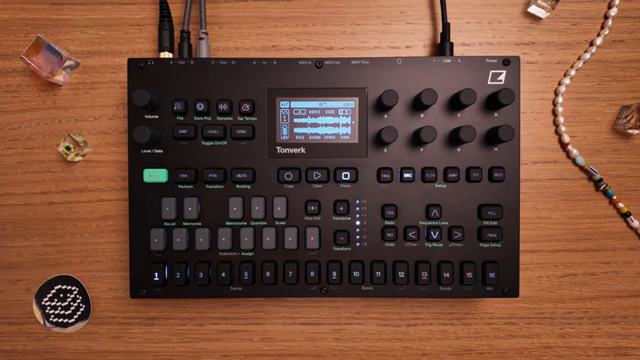
Elektron’s Grainer arrives as a fresh addition to the Tonverk OS, positioning itself as a creative granular machine designed to deconstruct samples into minuscule grains. The video wastes no time, immediately immersing the viewer in Grainer’s sonic potential—demonstrating how it can take any sample and atomize it for radical manipulation. This isn’t just about slicing audio; it’s about reimagining the DNA of your sounds.
What sets Grainer apart, as highlighted in the walkthrough, is its orientation toward playful sound design. The machine is introduced not as a mere effect, but as a full-fledged instrument for constructing evolving textures, strange rhythms, and continuous tones. Elektron’s signature workflow emphasis is present: Grainer is shown as a tool for both instant gratification and deep, exploratory patching, fitting neatly into the brand’s tradition of performance-focused digital innovation.
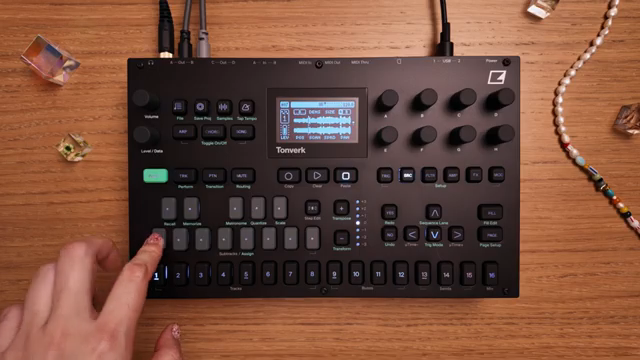
"Grainr cuts a sample into tiny pieces called grains, which can be rearranged and played back in different ways."
© Screenshot/Quote: Weareelektron (YouTube)
Polyphony and Play Modes: The Engine’s Core
"The machine is 8-voice polyphonic, and each voice can play up to 8 grains at once."
© Screenshot/Quote: Weareelektron (YouTube)
At the heart of Grainer lies an 8-voice polyphonic engine, with each voice capable of playing up to 8 grains simultaneously. This architecture enables thick, layered sounds or intricate, pointillistic textures, depending on how the user configures the parameters. The video makes clear that Grainer isn’t just about quantity—it’s about control over how those grains are deployed in real time.
Central to this control are Grainer’s three play modes: Random, Sync, and Oscillator. Each mode fundamentally changes how grains are triggered. Random mode creates unpredictable, organic movement; Sync mode locks grains to tempo for rhythmic manipulation; Oscillator mode repeats grains for continuous, sustained tones or glitchy artifacts. The walkthrough promises detailed, mode-specific examples, setting the stage for a granular engine that adapts to diverse musical needs.
Parameter Playground: Sculpting Grains and Motion
Grainer’s parameter set is impressively comprehensive, giving users granular (pun intended) control over every aspect of sound shaping. Grain size determines the length of each fragment—smaller grains yield choppy, staccato results, while larger grains reveal more of the original sample. Density, meanwhile, governs how often grains are triggered and how closely they overlap, with its behavior adapting to the selected play mode.
Further parameters like Grain Amount, Position, Spread, Scan, Direction, Fade, and Shape allow for deep manipulation. Spread and Scan, in particular, are highlighted for their ability to create evolving motion: Spread randomizes grain start points, while Scan morphs the playhead through the sample. Direction introduces forward/reverse morphing, and Fade/Shape define the envelope for each grain, enabling everything from percussive pops to lush pads. The walkthrough emphasizes that these controls are not just for subtle tweaks—they’re the keys to dynamic, ever-changing soundscapes.
Granular in Action: Workflows and Musical Examples
The video shifts from theory to practice, offering a series of hands-on examples that showcase Grainer’s versatility across all three play modes. In Random mode, the walkthrough demonstrates how modulating grain size, density, scan, and spread can yield drifting pads or unpredictable, fluctuating textures. The presenter carefully rebuilds patches step by step, illustrating how parameter choices translate into musical results—modulating scan with a triangle LFO for movement, or using spread to scatter grains for a more organic feel.
Sync mode is explored through rhythmic applications, such as turning a one-shot chord into a stuttering groove or layering resampled drums for glitchy fills. Here, the interplay between density and size is crucial for aligning grains to tempo, while parameter locks and LFOs inject per-step variation and evolving rhythms. The walkthrough doesn’t shy away from advanced tricks, like using grain amount as an accent or modulating filter cutoff for dynamic timbral shifts.
Oscillator mode rounds out the demonstration, transforming vocal samples into singing synths or glitchy time-stretch effects. The presenter highlights how grain size, density, and scan interact to create stable tones or smeared, stretched textures. These examples are not just surface-level presets—they’re workflow blueprints, showing how Grainer can be integrated into real-world sound design and performance scenarios.
Filter and EQ: Final Touches for Sonic Sculpting
Beyond its granular core, Grainer features a dedicated filter and EQ section that elevates its sound-shaping capabilities. The filter page offers multiple types—low pass, band pass, high pass, notch, and more—each with a spread control for additional timbral flexibility. The walkthrough demonstrates how filter cutoff can be modulated for movement, or used in tandem with grain parameters to tame or accentuate specific frequencies.
The integrated EQ, with low and high shelf gains, allows for precise tonal adjustments. The presenter shows how boosting lows or highs can add body or shine to a patch, especially when combined with filter modulation. These tools aren’t afterthoughts; they’re essential for dialing in the final character of a sound, ensuring that Grainer’s output sits well in a mix or stands out as a centerpiece in a performance.
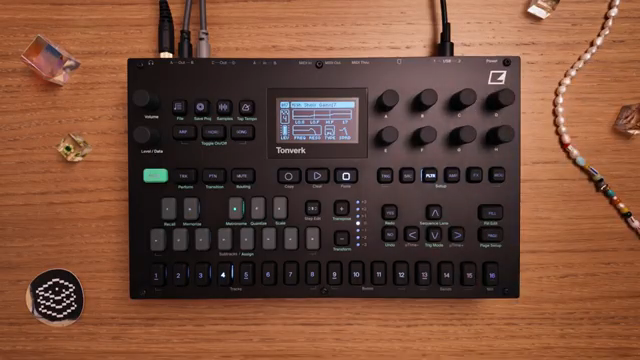
"Since Grainer can easily access a wide range of tones, the EQ and the filter become useful tools for shaping the final sound."
© Screenshot/Quote: Weareelektron (YouTube)
This article is also available in German. Read it here: https://synthmagazin.at/elektron-entfesselt-grainer-ein-granular-spielplatz-in-tonverk-os-1-1-0/
Watch on YouTube:
Latest articles
Watch on YouTube:
Visit the channel:
https://www.youtube.com/WeAreElektron
https://www.youtube.com/WeAreElektron
Links from WeAreElektron:
website: https://www.elektron.se
twitter: https://twitter.com/WeAreElektron
facebook: https://www.facebook.com/WeAreElektron
instagram: https://instagram.com/weareelektron
Sponsored links:
If you purchase via these links, we may earn a small commission – at no extra cost to you. The link opens an Amazon keyword search, and results may vary depending on availability.
Elektron Tonverk
🔗 Check price on Amazon
🔗 Check price on Amazon