Elektron’s Tonverk steps boldly into the world of digital effects processing, offering a suite of new tools for sound designers and producers who crave both grit and finesse. In this official tutorial, Risa T walks us through Tonverk’s latest effect machines, from lo-fi destruction to lush spatial treatments, all with the signature Elektron focus on sequenced modulation and hands-on control. As always, Elektron’s workflow-centric approach is front and center, with parameter locks, flexible routing, and creative LFOs enabling nuanced sonic manipulation. For those interested in how digital effects can be architected for real-world musicality, this video is a must-watch—and we’re here to break down what’s actually demonstrated.
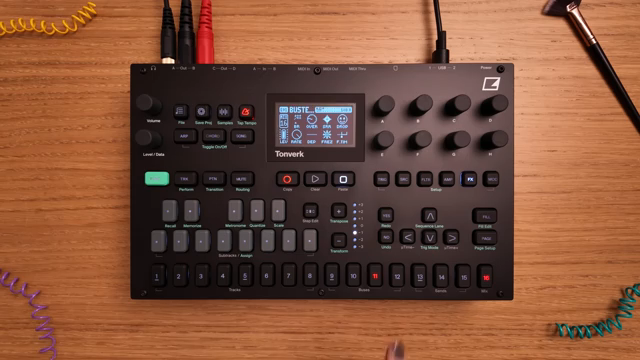
Tonverk Unveiled: An FX Powerhouse
Tonverk arrives as Elektron’s latest foray into the world of digital effects, positioning itself as more than just a utility box—it’s a creative instrument in its own right. The video opens by highlighting Tonverk’s comprehensive effects suite, which includes both Elektron classics and a host of new machines designed to push sonic boundaries. This isn’t just about slapping reverb or delay onto a track; Tonverk is architected for deep sound design and musical experimentation.
A key strength here is the flexibility of effect deployment: effects can be loaded on individual tracks, bus tracks, send effects, and even the master mix. The system supports two dedicated effects LFOs per machine, and crucially, every parameter can be sequenced—true to Elektron’s DNA. The video sets the stage for a detailed exploration of these new effects, promising a workflow that encourages both subtle enhancement and radical transformation.
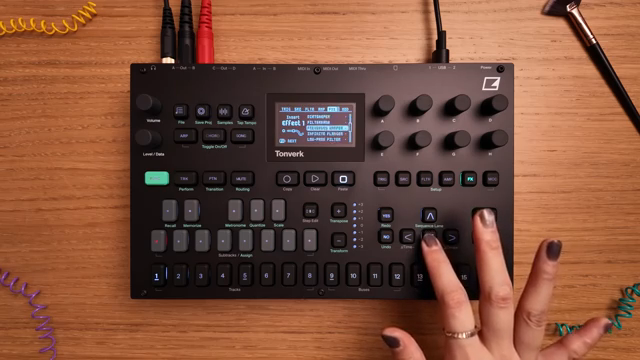
"The effects machines can be modulated with two effects LFOs and can be sequenced on every track, including the bus tracks, send effects tracks, and the mix track."
© Screenshot/Quote: Weareelektron (YouTube)
Meet the Newcomers: Degrader, Dirt Shaper, Infinite Flanger, and Chrono Pitch
The tutorial dives straight into Degrader and Dirt Shaper, two effects that revel in digital destruction and characterful coloration. Degrader combines bit reduction, sample rate reduction, and ring modulation, with additional controls for glitch and stutter via Drop and Freeze parameters. These aren’t just static effects: the video demonstrates how Freeze can be sequenced with parameter locks for precise rhythmic stutters, while Drop introduces random dropouts for unpredictable glitch textures. Dirt Shaper, on the other hand, brings classic overdrive and rectification, plus a noise circuit ring-modulated with the input, all shaped by flexible filtering. The high-pass filter’s bipolar design allows for pre- or post-distortion shaping, giving users granular control over the resulting grit.
Infinite Flanger and Phase 98 expand the modulation palette. Infinite Flanger offers a barber pole effect for endless rising or falling sweeps, with feedback and delay time controls that morph the effect from jet-plane flanging to cone filtering or even echo territory. Phase 98 is a morphing phaser where the stage count and feedback can be modulated, and stereo movement is achieved by offsetting LFO phase between channels. The video also introduces Chrono Pitch, a granular pitch shifter with window size, pitch quantization, and feedback for metallic or harmonically rich textures. Built-in LFOs modulate pitch and dry/wet balance, and the effect can be used musically by locking pitch to intervals like octaves or fifths.
Sequenced FX: Sculpting Soundscapes with Parameter Locks
"On the mix track sequencer, I've created parameter locks to control freeze, just to show you an example of how effects can be sequenced."
© Screenshot/Quote: Weareelektron (YouTube)
One of Tonverk’s defining features is the ability to sequence effect parameters with Elektron’s renowned parameter locks. The video showcases this by locking the Freeze parameter on Degrader to specific steps, creating controlled stutter effects that are rhythmically integrated into the pattern. By automating effect depth and timing, users can inject movement and complexity into their soundscapes, transforming static effects into dynamic, evolving textures. This sequenced approach is central to Tonverk’s creative workflow, enabling expressive manipulation that goes far beyond simple on/off automation.
Routing and Modulation: The Architecture of FX Control
The tutorial doesn’t just stop at individual effects—it delves into how Tonverk’s routing and modulation systems empower users to build complex processing chains. Effects can be assigned to different track types, with some (like Frequency Warper) reserved for bus or mix tracks. The routing menu allows for flexible signal assignment, demonstrated by sending tracks to specific busses to target effects like Frequency Warper, which shifts frequencies inharmonically for otherworldly textures. This modular approach is essential for advanced sound design and mixing workflows.
Modulation is handled by two dedicated FX LFOs per effect, which can be assigned to any parameter. The video illustrates this with LFOs modulating delay times, dry/wet balances, and more—resulting in effects that evolve over time or respond to performance gestures. The combination of routing flexibility and deep modulation makes Tonverk a powerful hub for both subtle enhancement and radical transformation.
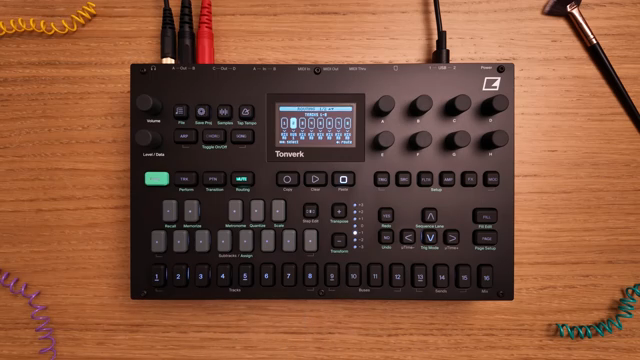
"This is an effect in the style of vintage analog effects. It moves frequencies up and down without preserving their harmonic relationships, making your sounds inharmonic and adding an otherworldly character."
© Screenshot/Quote: Weareelektron (YouTube)
Daisy Delay & Ramsklang Reverb: Spatial FX for Modern Production
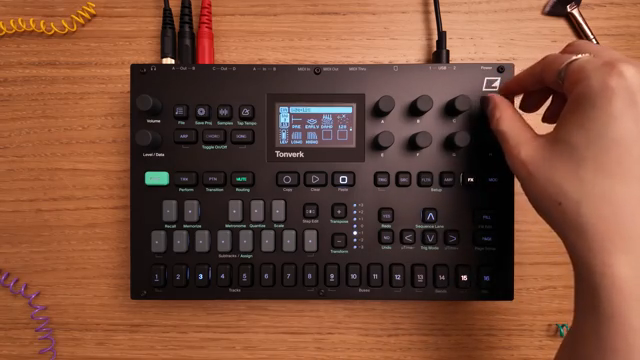
"With its size set to Max, it creates the feel of a massive environment with a lot of persistence added to the sound."
© Screenshot/Quote: Weareelektron (YouTube)
The final segment spotlights Daisy Delay and Ramsklang Reverb, two spatial effects designed for the Send FX tracks. Daisy Delay offers detailed control over stereo imaging, rhythmic skewing, and internal modulation, with time divisions that can be snapped to musical values. The effect’s drive and width parameters allow for further shaping, while filters tame the repeats. The video demonstrates how modulating delay time and LFO speed with FX LFOs creates evolving, pitch-shifting echoes that add both movement and depth to the mix.
Ramsklang Reverb is presented as a tool for simulating vast spaces, with size, damp, and early reflection controls shaping the reverb’s character. The effect excels at adding presence and atmosphere, transforming minimal patterns into immersive soundscapes. The tutorial wraps up by layering these effects, illustrating how Daisy Delay and Ramsklang Reverb can breathe life into even the sparsest arrangements—showcasing Tonverk’s potential as a creative centerpiece in modern production workflows.
This article is also available in German. Read it here: https://synthmagazin.at/elektron-tonverk-ein-tiefer-blick-ins-neue-fx-arsenal/
Watch on YouTube:
Latest articles
Watch on YouTube:
Visit the channel:
https://www.youtube.com/WeAreElektron
https://www.youtube.com/WeAreElektron
Links from WeAreElektron:
website: https://www.elektron.se
twitter: https://twitter.com/WeAreElektron
facebook: https://www.facebook.com/WeAreElektron
instagram: https://instagram.com/weareelektron
Sponsored links:
If you purchase via these links, we may earn a small commission – at no extra cost to you. The link opens an Amazon keyword search, and results may vary depending on availability.
Elektron Tonverk
🔗 Check price on Amazon
🔗 Check price on Amazon