DivKid’s back in the bunker, this time with the DPW SW3 Splice – a dual-channel switch that’s smarter than your average toaster and twice as dangerous. Forget boring mute switches; this beast slices, dices, and splices audio and CV with zero-crossing finesse and slope-detecting wizardry. In classic DivKid fashion, we get three killer patches, a couple of bonus curveballs, and enough modulation mayhem to keep your rack sweating. If you’re craving click-free switching and stereo chaos, strap in – this is not your gran’s utility module.
23. January 2026
SPARKY
DivKid’s SW3 Splice: The Smart Switch That Makes Your Patch Scream
Meet the Splice: Not Your Average Switch
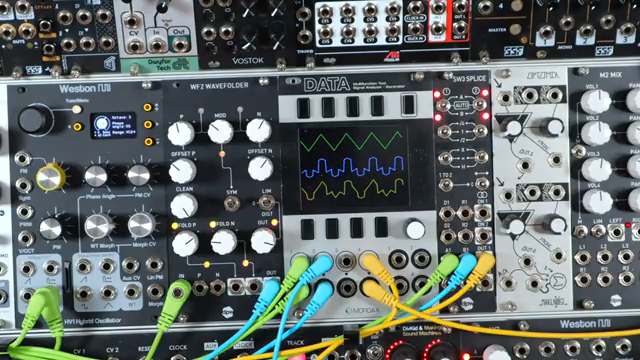
DivKid wastes no time introducing the DPW SW3 Splice, a dual-channel switch module that’s got more brains than most of your rack. This isn’t just a basic on/off affair – it’s designed for both audio and CV, and it’s all about creative, click-free switching. The video sets the tone: three patches, a couple of cheeky extras, and a promise of unique waveforms and stereo wizardry.
Right out of the gate, we’re told this module builds on DPW’s previous Switch and Zero modules, but with a twist. The Splice brings together two channels of intelligent switching, letting you merge, mute, and gate audio or modulation sources in ways that’ll make your patch cables blush. If you’re after a utility that actually earns its rack space, this is one to watch.
Features That Actually Matter
Let’s talk features – and for once, they’re not just marketing fluff. The SW3 Splice gives you click-free switching thanks to zero crossing and zero difference detection, so your audio stays clean even when you’re mashing signals. There’s a slope detection mode for even smoother transitions, plus a hard switch mode if you want it raw and dirty.
DivKid walks through the panel: dual switches, A/B inputs, square wave outputs, and a mode selector that flips between click-free, slope-detect, and hard switching. There’s also a division switch for subharmonics and clock-like behaviour, stereo linking options, and instant reset inputs. It’s a utility module, but with enough tricks to keep even the most jaded patch-head interested.
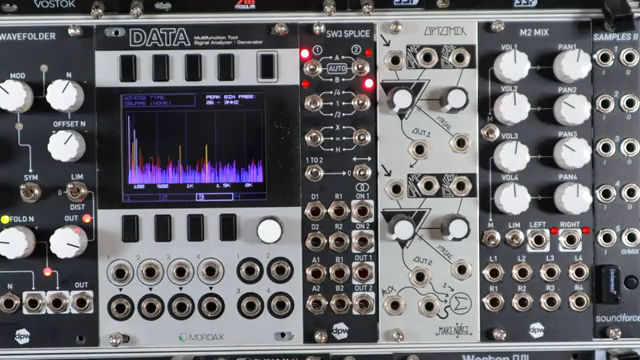
"Click-free zero crossing or zero difference switching, but then with an even further and even smoother switching of the inputs, with added slope detection."
© Screenshot/Quote: Divkid (YouTube)
Three Patches That Prove the Point
"It's really quite clever, it gives some really nice unique tones."
© Screenshot/Quote: Divkid (YouTube)
Now for the good stuff: DivKid’s three patches show off the Splice’s real-world muscle. First up, we get mono-to-stereo oscillator splicing – triangle waves, wavetables, and wavefolded signals all getting sliced and diced, with division rates creating evolving stereo images. The Splice handles it all without breaking a sweat, and the stereo field gets a proper workout.
Next, things get animated with LFOs and modulation. By splicing between modulated waveforms, DivKid creates unique, artefact-free LFO streams that can modulate everything from pulse width to filter cutoff. The module’s division and slope detection features keep things tight and musical, even when the patch gets complex.
Finally, we see the Splice used for rhythmic gating and pulse generation, with the on-outputs driving VCAs for percussive effects. The sound design possibilities are massive, but as always, you’ll need to watch the video to catch every twist and turn – the visuals and audio examples do more than words ever could.
Bonus Round: Modulation Madness and Stereo FX Mayhem
DivKid isn’t done yet – he throws in bonus patches that push the Splice even further. One example shows how you can merge different types of modulation, like envelopes and LFOs, to control stereo VCAs. The result? Animated, ping-ponging stereo movement that’s impossible to get with vanilla modulation routing.
The real showstopper, though, is the aggressive splicing of parallel stereo effects. By switching between delay and reverb streams at audio rates, DivKid creates dystopian, crunchy textures that sound like a toaster-fight in a rave bunker. It’s not always clean, but it’s gloriously filthy – and filtering the output can tame the chaos if you’re feeling polite.
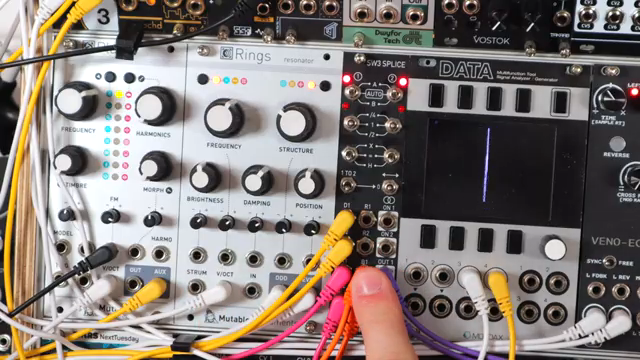
"On the A inputs here pink cables I have a stereo delay which is the vino echo and then switching down to the B inputs I have a reverb from ESU's trifecta again in stereo."
© Screenshot/Quote: Divkid (YouTube)
Patch Inspiration, DivKid Style
The takeaway? The SW3 Splice isn’t just another utility – it’s a street weapon for creative sound design. DivKid’s practical demos and off-the-cuff insights will have you eyeing your patchbay for new ways to mash, blend, and animate your signals. If you want to hear the module’s full sonic carnage, though, you’ll need to hit play and experience the madness yourself.
This article is also available in German. Read it here: https://synthmagazin.at/divkid-und-das-sw3-splice-der-smarte-switch-fuer-wilde-patches/
Watch on YouTube:
Latest articles
Watch on YouTube:
Visit the channel:
https://www.youtube.com/DivKid
https://www.youtube.com/DivKid
Links from DivKid:
Patreon: https://patreon.com/divkid
Website: https://divkidvideo.com
Instagram: https://instagram.com/divkidvideo
Twitter: https://twitter.com/divkid
Facebook: https://facebook.com/Sir.DivKid
Sponsored links:
If you purchase via these links, we may earn a small commission – at no extra cost to you. The link opens an Amazon keyword search, and results may vary depending on availability.
DPW SW3 Splice
🔗 Check price on Amazon
🔗 Check price on Amazon