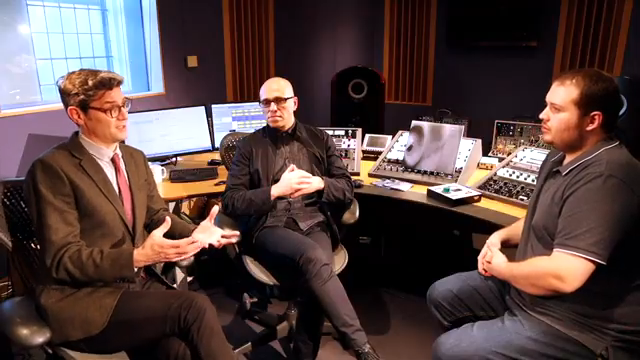
In this atmospheric dialogue, DivKid invites us to drift through the fog-laced corridors of modular synthesis with d’Voxx—Paul and Nino—whose album ‘Telegraph’ becomes a living map of creative intent. The conversation is less a technical manual and more a meditation on the philosophy of capturing modular sound: performance, intuition, and the magnetic resonance between live energy and studio sculpting. Here, every patch and EQ sweep is a brushstroke on a canvas of shifting frequencies. For those who sense music as landscape and emotion, this video is a portal into the secret rituals behind modular storytelling. Some moments, like the bloom of a resonant filter or the ghostly decay of reverb, truly must be witnessed in the video itself.
3. February 2026
LUMINA
DivKid Illuminates Modular Alchemy: d’Voxx on Recording, Producing & Mixing Sonic Narratives
Clouds, Distinct Mk3, DLD, ER-301, Instra CSL, Mackie 14:2 Mixer, Rosy, Tangle Quartet, Urverb
Philosophy in the Patch: The Ethos of Modular Recording
From the very first moments, we are ushered into a space where recording modular synthesizer music is not just a technical act but a philosophical gesture. Paul and Nino of d’Voxx reveal that their process is guided by intuition—knowing when a performance has breathed its last, when the nebula of sound has given all it can. The act of recording becomes a ritual, a balance between spontaneity and restraint, where over-rehearsal is shunned in favor of capturing the living pulse of the moment.
Their approach is to let the machines and their own instincts dictate the boundaries. Long takes stretch out like fog across a moor, sometimes lasting up to twenty minutes, but always with an ear tuned to the emotional arc. They speak of leaving space, of marking moments for later exploration, and of trusting each other’s judgment—a creative partnership where intent and accident are equally honored. This is not just about capturing notes, but about bottling the atmosphere, the ghosts that flicker between the wires.
Telegraph’s Tapestry: Workflow Between Performance and Production
The workflow behind ‘Telegraph’ is a dance between live energy and reflective editing. d’Voxx record multiple takes, each one a different constellation of possibility. They allow the performances to breathe, then step back—sometimes for days—before returning to sculpt the raw material. Editing is not a cold dissection but a conversation, with each member taking turns to refine and review, always mindful of the other’s vision.
This interplay between performance and post-production is like weaving a tapestry from threads of improvisation and intention. The duo avoids over-editing, preferring to preserve the integrity of the original performance. Yet, when necessary, they are unafraid to condense, rearrange, or highlight the most evocative fragments. The result is music that feels both immediate and timeless, a sonic artifact shaped by both hands and heart.
Sculpting the Sonic Sculpture: EQ, Effects, and the Art of Mixing
Mixing for d’Voxx is an act of sonic sculpture, where EQ and effects are used not to polish away character but to reveal hidden forms within the sound. Paul, with his mix engineer’s intuition, describes broad equalization—dipping frequencies around 160 to 210 Hz to carve space, pushing at 1–2 kHz for clarity, and sometimes applying a resonant low-pass filter at 7–8 kHz for a grainy, tactile finish. These gestures are less about technical perfection and more about shaping the emotional impact, like sanding a sculpture until it catches the light just so.
Compression is applied with a painter’s touch, using tools like Ableton’s Glue Compressor to embrace the mix, lifting the bass and binding elements together. The duo emphasizes subtractive EQ, removing what clouds the image rather than piling on frequencies. This approach is about creating space—letting each element bloom in its own spectral garden, ensuring the music moves the listener not just physically but emotionally.
The process is bold, sometimes requiring decisive moves rather than subtle tweaks. d’Voxx remind us that mixing is not a sterile technicality but a creative act, one that shapes the emotive experience as much as any melody or rhythm. The real magic, they hint, is in those moments where the mix transforms a take into a living, breathing record—a metamorphosis best experienced in the video’s immersive soundscape.
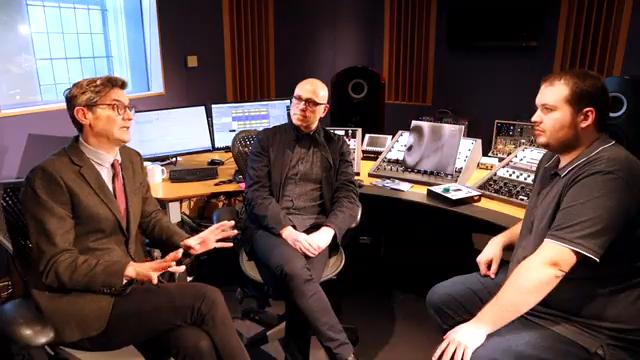
"I'll usually do a little dip, a little scoop around sort of, you know, somewhere between, it could be, it's usually probably about 160 up to about 210 hertz."
© Screenshot/Quote: Divkid (YouTube)
Live Currents: Performance Energy and Studio Reflection
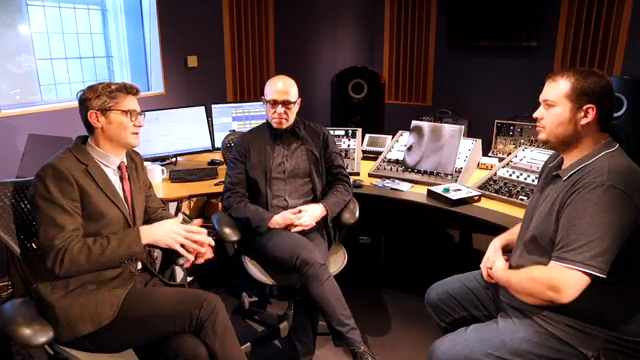
"But it's not. It's a performance. I marvel at that. I think that's amazing."
© Screenshot/Quote: Divkid (YouTube)
d’Voxx draw a magnetic line between their live performances and studio recordings, letting the raw energy of the stage inform their studio techniques. They recall the three-dimensional, uncompressed force of modular sound in a live setting—a physical experience that cannot be replicated by mere playback from a laptop. Their goal is to capture this resonance, to make the listener feel as if they are standing at the edge of the stage, enveloped by waves of analog electricity.
Yet, they are careful not to overproduce, seeking a balance where the vitality of live improvisation is preserved. Sometimes, the most complex-sounding tracks are in fact single-take performances, their intricacy born from the interplay of hands and machines in real time. The duo’s approach is to let the performance breathe, to allow the unpredictable to shape the final artifact. In this way, the studio becomes an extension of the stage—a place where energy is not tamed, but channeled.
Machines, Choices, and the Alchemy of Modular Mixing
The final act of this journey is a deep dive into the machinery and decisions that define d’Voxx’s sound. Their setups are built around two 14:2 mixers, with auxiliary sends feeding effects like the Urverb, Distinct Mk3, and the DLD. Submixers such as the Tangle Quartet and Rosy allow for nuanced layering, while modules like Clouds and the ER-301 become both instruments and sculptors of texture. Each choice—routing, EQ, panning—adds another brushstroke to the canvas.
Mixing within the modular system itself is a dance of constraints and creativity. The duo avoids dedicating too much rack space to mixers, preferring instead to use modules as submixers and to let performance mixers provide tactile control. Effects are often recorded live, their character inseparable from the source. Reverbs are sculpted with EQ, stripping low end and midrange to let the shimmer float above the mix, while compression and filtering are applied with intention, never by rote.
Live, they are more heavy-handed with effects, letting reverb and delay flood the room, capturing the energy of the moment. In the studio, the approach is more restrained, but always guided by the desire to preserve the magic of the original performance. The conversation is rich with technical detail—yet the true alchemy, the transformation of voltage into emotion, is something that words can only hint at. For the full resonance, one must step inside the video’s sound world.
This article is also available in German. Read it here: https://synthmagazin.at/divkid-beleuchtet-modulare-alchemie-dvoxx-ueber-das-aufnehmen-produzieren-mischen-von-klanggeschichten/
Watch on YouTube:
Latest articles
Watch on YouTube:
Visit the channel:
https://www.youtube.com/DivKid
https://www.youtube.com/DivKid
Links from DivKid:
Patreon: https://patreon.com/divkid
Website: https://divkidvideo.com
Instagram: https://instagram.com/divkidvideo
Twitter: https://twitter.com/divkid
Facebook: https://facebook.com/Sir.DivKid
Sponsored links:
If you purchase via these links, we may earn a small commission – at no extra cost to you. The link opens an Amazon keyword search, and results may vary depending on availability.
Clouds
🔗 Check price on Amazon
🔗 Check price on Amazon
Distinct Mk3
🔗 Check price on Amazon
🔗 Check price on Amazon
ER-301
🔗 Check price on Amazon
🔗 Check price on Amazon
Instra CSL
🔗 Check price on Amazon
🔗 Check price on Amazon
Mackie 14:2 Mixer
🔗 Check price on Amazon
🔗 Check price on Amazon
Rosy
🔗 Check price on Amazon
🔗 Check price on Amazon
Tangle Quartet
🔗 Check price on Amazon
🔗 Check price on Amazon
Urverb
🔗 Check price on Amazon
🔗 Check price on Amazon