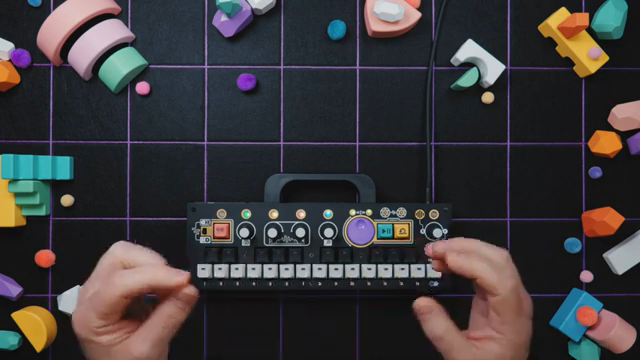
Chase Bliss, known for their playful yet deep effects architecture, has dropped the TEMPO firmware for CHOMPI, transforming this quirky sampler into a hands-on groovebox with a syncable, pattern-driven heart. In this official overview, the team walks through how TEMPO reimagines CHOMPI’s workflow—bringing in intuitive pattern generation, new sound design tools, and a performance-focused interface that feels both familiar and refreshingly new. We dive into the firmware’s multi-engine approach, explore its pattern generator and slice engine, and examine how the new preset and snapshot systems empower live experimentation. If you’re curious about how digital groovebox concepts can be mapped onto compact hardware, this is a must-watch (and must-read) update.
4. March 2026
LYRA
Chase Bliss CHOMPI: TEMPO Firmware – Groovebox DNA for the Playful Sampler
TEMPO: CHOMPI’s Groovebox Rebirth
The TEMPO firmware marks a significant shift for the CHOMPI, Chase Bliss’s compact sampler, by reimagining it as a groovebox with a focus on pattern creation and rhythmic play. Unlike the previous Tape firmware, TEMPO introduces a workflow that feels fundamentally different, yet retains the tactile, exploratory spirit that defines the CHOMPI experience. The video’s presenter emphasizes that while the hardware remains unchanged, the musical outcomes and creative pathways are transformed—TEMPO is not just an update, but a new instrument living inside the same box.
This transformation is rooted in an interface designed for immediacy and hands-on control. Key functions remain familiar, ensuring that existing users can jump in quickly, but the addition of pattern-based sequencing and syncable clocking opens up new territory. The video promises a top-down tour of these changes, highlighting both the continuity and the radical new directions enabled by TEMPO’s architecture.
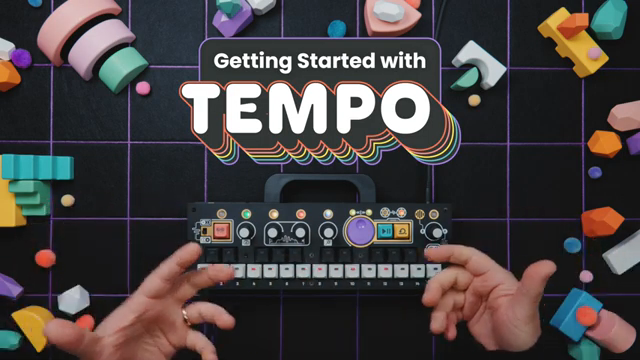
"This new firmware feels like it unlocks a brand new instrument within this same Chompy hardware."
© Screenshot/Quote: Chaseblissaudio (YouTube)
Sound Design Engines: Filters, Crunch, and Sample Windows
"With the tempo firmware, we can now make our sample window so small that it can actually become an oscillator for something like making like a wavetable synth voice."
© Screenshot/Quote: Chaseblissaudio (YouTube)
TEMPO’s control surface brings a suite of new and refined features to CHOMPI’s sound design workflow. The four encoders now offer expanded pages and shift functions, making it possible to access speed, direction, volume, pan, and a third page dedicated to sample-specific effects. Notably, the new multimode resonant filter—described as a DJ-style filter with built-in resonance—sits alongside a sample rate reduction effect, both of which operate pre-filter for creative tone shaping. These parameters are saved per preset and per sample, supporting repeatable sound design choices.
Sample start and end points are now more interactive, with encoders two and three working in tandem to define the playback window. This window can be shrunk down to the point where it becomes a wavetable-like oscillator, opening up experimental synthesis possibilities from any recorded material. The video demonstrates this by turning both musical and non-musical samples (like a finger snap) into pitched, filtered tones—showcasing the firmware’s flexibility for both conventional and unconventional sound sources.
Further, the envelope section now features attack and release controls, with toggles for looping and sustain. These toggles, accessed via shift functions, allow users to tailor sample playback for percussive or sustained roles—an essential detail for sequencing. All these controls are designed for quick resets and intuitive access, reinforcing the firmware’s commitment to hands-on, performance-friendly workflows.
Pattern Generator: Where Arp Meets Step Sequencer
At the heart of TEMPO’s groovebox identity is its pattern generator—a hybrid between an arpeggiator and a step sequencer. The interface is designed for immediacy: holding notes triggers them on a rhythmic grid synced to the master clock, while latching (via the loop key) allows for real-time sequence editing. The length of a pattern is determined by the number of notes, and users can add or subtract steps on the fly, with all changes reflected instantly in playback.
Beyond basic sequencing, the pattern generator introduces multiple arp styles (note order, up, down, ping-pong, random) and a set of rest patterns that nudge notes to create rhythmic variety. Probability controls add further unpredictability, allowing steps to jump octaves or alter order. Clock divisions, multiplications, and tap tempo are all accessible from the transport knob, making it easy to adapt patterns to different musical contexts. The result is a sequencing engine that encourages both structured grooves and happy accidents—a clear nod to the playful ethos of Chase Bliss.
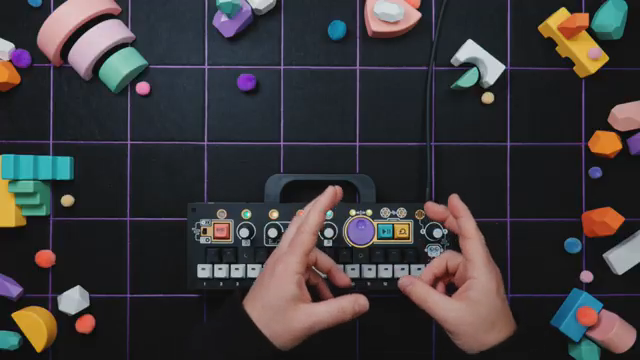
"The pattern generator, which is essentially like a quirky arpeggiator meets a simplified step sequencer."
© Screenshot/Quote: Chaseblissaudio (YouTube)
Effects and Slice Engine: Parallel Playgrounds for Sound Design
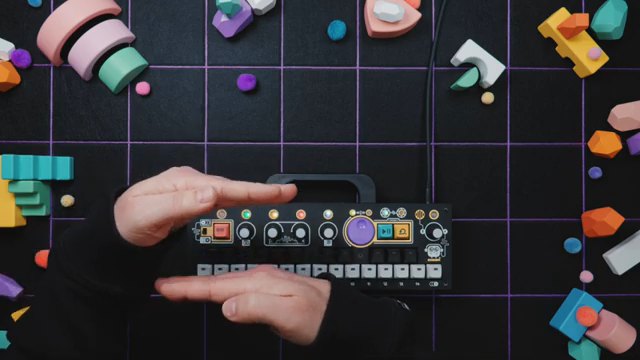
"Both of our sampling engines are actually running in parallel to one another, meaning that they can play at the exact same time and they can be sequenced totally independently of one another."
© Screenshot/Quote: Chaseblissaudio (YouTube)
TEMPO’s effects engine has been rebuilt to complement its pattern-centric workflow, centering on a clock-synced delay with two distinct flavors. The left side offers a looping delay tied to mathematical clock intervals, while the right side introduces a diffusion reverb for more atmospheric textures. Shift functions add randomization—octave jumps, reverses, and panning—creating pseudo-granular effects that remain musically locked to the tempo. There’s also a freeze function for capturing and looping delay buffers, and a hidden page for per-engine effect sends and feedback control, including a sidechain-style ducking feature that responds dynamically to new material.
The slice engine, running in parallel to the chromatic sample engine, replaces the old one-shot mode. It divides a single audio file into 16 slices mapped to the white keys, allowing for drum kits, melodic content, or experimental sample sets. Users can record directly into the slice engine or import pre-gridded files from a DAW. Start and end points for the sample window affect all slices, enabling creative re-contextualization of material. Both engines can be sequenced and played independently, supporting layered patterns and complex arrangements.
This dual-engine approach is a standout architectural choice, letting users treat CHOMPI as both a groovebox and a sample-mangling workstation. The video demonstrates building drum patterns in slice mode while simultaneously crafting synth voices in the chromatic engine, highlighting the firmware’s potential for DAWless and live performance workflows.
Presets and Snapshots: Dynamic Recall for Live Play
TEMPO introduces new behaviors for preset management, emphasizing flexibility and non-destructive experimentation. Changes to a preset are not saved automatically; instead, users must manually overwrite the slot to make edits permanent. This encourages risk-taking during performance, as it’s always possible to revert to a saved state with a quick recall. The video illustrates how this approach supports both structured pattern building and spontaneous sound design, with the ability to snap back to a known starting point at any time.
Snapshots add another layer of dynamic recall, functioning as two auto-save slots (A and B) that capture the entire state of the instrument. Users can copy, edit, and jump between snapshots instantly, treating them as performance decks or as a pseudo-undo system. This dual-snapshot system is pitched as a way to avoid creative dead ends, making it easy to experiment, compare ideas, or recover from a misstep during a live set. The result is a memory architecture that feels both robust and improvisation-friendly—very much in line with Chase Bliss’s ethos of playful, exploratory music-making.
Watch on YouTube:
Latest articles
Watch on YouTube:
https://www.youtube.com/ChaseBlissAudio
Links from ChaseBlissAudio:
Sponsored links:
If you purchase via these links, we may earn a small commission – at no extra cost to you. The link opens an Amazon keyword search, and results may vary depending on availability.
🔗 Check price on Amazon