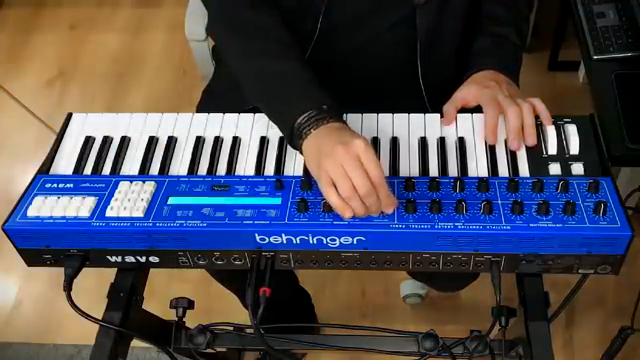
The Behringer Wave steps into the spotlight as a modern wavetable synthesizer channeling the spirit of classic 80s digital instruments. In this official hands-on demo, Behringer highlights the Wave’s ability to deliver both 8 and 12-bit wavetable synthesis, multi-timbral layering, and a suite of performance tools. The video walks through split programs, stereo imaging, and a range of vintage-flavored presets, while also showcasing workflow-centric features like a sequencer, arpeggiator, and extensive modifier controls. As always with Behringer, the focus is on accessible power and hands-on sound design, but this time with a distinctly digital edge.
11. December 2024
LYRA
Behringer Wave: Digital Wavetable Power with Vintage Attitude
Digital Heritage: The Behringer Wave’s Core Architecture
The Behringer Wave positions itself as a modern homage to the legendary wavetable synths of the 1980s, offering both 8 and 12-bit sound synthesis. This dual-resolution approach allows users to tap into the gritty, characterful textures of early digital hardware while also exploring cleaner, more detailed timbres. The video immediately frames the Wave as a versatile instrument, capable of conjuring classic tones that defined an era of electronic music.
Multi-timbral layering is a central feature, with the ability to stack up to eight different sounds. This opens the door to complex, evolving patches and split-keyboard setups, making the Wave suitable for both studio sound design and live performance. The demo hints at the instrument’s flexibility, but keeps the focus on its vintage digital flavor and hands-on immediacy.
Split Programs, Stereo Tricks, and Preset Playground
The Wave’s interface puts essential sound-shaping controls front and center. The demo showcases split programs, where bass and pad sounds can be assigned to different keyboard zones—bass on the left, pad on the right—enabling rich, layered performances. The stereo knob is a standout, allowing users to morph between mono and wide stereo fields, with clever panning behaviors that alternate notes left and right for immersive effects.
A tour through the preset library reveals a strong focus on vintage character: bell tones, lush pads, and punchy basses all evoke the digital classics. The ability to tweak attack, open up pads or basses, and explore the full range of timbral possibilities is highlighted, with the interface designed for quick, intuitive adjustments. While the video emphasizes the sound palette, it also hints at deeper programmability beneath the surface.
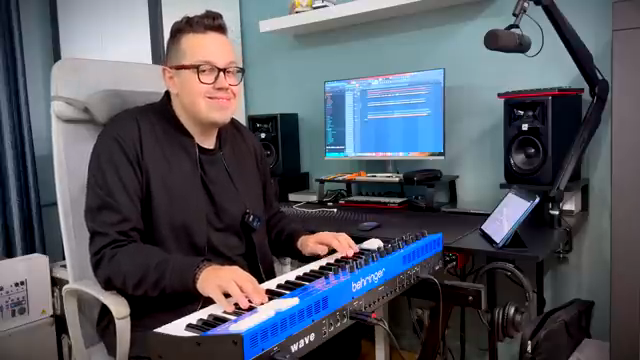
"I love this vintage sound in this."
© Screenshot/Quote: Behringer (YouTube)
Sequencer and Arpeggiator: Building Grooves on the Wave
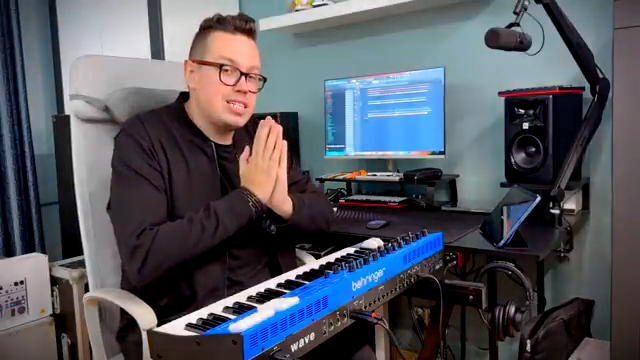
"Of course I can save it in my program yeah. It could be useful when you're playing live concert with this machine."
© Screenshot/Quote: Behringer (YouTube)
Performance workflow is a major theme, with the Wave’s built-in sequencer and arpeggiator taking center stage. The sequencer operates in step mode, allowing users to input bass lines and melodies without worrying about real-time timing—ideal for constructing precise patterns. The demo illustrates how easy it is to set tempo, record steps, and then adjust note divisions with a single click, transforming a slow groove into a driving sixteenth-note sequence.
A key strength is the ability to save sequences directly within programs, making it practical for live use. The process of storing and recalling sequences is straightforward: record, save, and instantly retrieve your work from the program memory. The arpeggiator offers similar flexibility, letting users quickly switch modes and note divisions for evolving patterns.
Throughout, the video underscores how these tools integrate with the Wave’s multi-function control panels, enabling real-time manipulation of analog and digital parameters. This tight coupling between sequencing, sound design, and performance control is a highlight, though the demo leaves some questions about deeper editing and pattern management unanswered.
Modifiers and Sound Sculpting: The Wave’s Creative Toolkit
Modifiers are at the heart of the Wave’s sound design philosophy. The video demonstrates how users can shape envelopes, tweak modifiers, and adjust every parameter directly from the panel, with all changes instantly savable to programs. The analog and digital control panels provide access to both classic synth parameters and more specialized digital functions like pitch bend range and wave shape selection.
Exploring the modifiers yields a wide spectrum of sonic results—from sweeping, oceanic pads to glitchy, lo-fi textures that embrace the quirks of vintage digital synthesis. Aftertouch, velocity, and real-time control are all in play, giving performers expressive tools to animate their patches. The demo also touches on user slots and the flexibility of the interface, though it leaves the depth of menu navigation and parameter mapping for future exploration.
"Modifiers are really important in this machine. You can do a lot of with sound with with all these knobs."
© Screenshot/Quote: Behringer (YouTube)
This article is also available in German. Read it here: https://synthmagazin.at/behringer-wave-digitale-wavetable-power-mit-vintage-charme/
Watch on YouTube:
Latest articles
Watch on YouTube:
Visit the channel:
https://www.youtube.com/behringer
https://www.youtube.com/behringer
Links from behringer:
website: https://www.behringer.com
facebook: https://www.facebook.com/Behringer
twitter: https://twitter.com/BEHRINGER
instagram: https://instagram.com/Behringer
Sponsored links:
If you purchase via these links, we may earn a small commission – at no extra cost to you. The link opens an Amazon keyword search, and results may vary depending on availability.
Behringer WAVE
🔗 Check price on Amazon
🔗 Check price on Amazon