Behringer steps boldly into the modulation arena with Steps, a compact Eurorack module that promises to be the answer to your CV generation conundrums. On their official channel, Behringer showcases how Steps fuses six independent sections, each capable of acting as an envelope, LFO, sequencer, or something in between. The video walks through the module’s flexible modes and patching tricks, making it clear that Steps is designed for both small, space-starved racks and sprawling modular setups. For those who thrive on patching experiments and crave versatile modulation, Steps looks set to become a go-to utility—provided you’re ready to explore its multi-mode depths.

A Compact Powerhouse of CV Generation
Behringer introduces Steps as a multi-function CV generator aimed squarely at the modular crowd who value flexibility in a tight space. The video wastes no time in positioning Steps as a solution for those wanting envelopes, LFOs, sequencers, and more—all in one module. With its six identical sections, Steps is pitched as a tool that can morph to fit a variety of modulation needs, whether you’re building up a small skiff or expanding a larger system.
The emphasis here is on versatility: each section can operate independently or be chained, allowing users to sculpt complex modulation shapes or keep things simple with single-stage triggers. Behringer’s presentation style, as ever, is clear and accessible, focusing on practical patching examples rather than abstract theory. For anyone who’s ever run out of modulation sources mid-patch, the appeal is obvious.
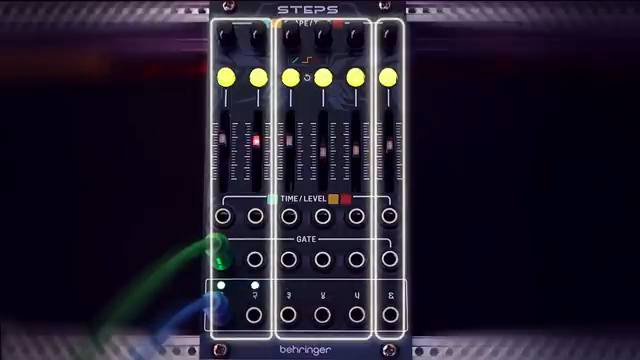
"Steps can be used as a multiple stage envelope, multiple LFO, sample and hold, step sequencer, or a creative mix between them."
© Screenshot/Quote: Behringer (YouTube)
Six Sections, Infinite Possibilities
"Just like a classic envelope, each step start generating a CV as soon as a trigger gate signal is received, or when the previous step has finished its cycle."
© Screenshot/Quote: Behringer (YouTube)
Each of the six steps on the module comes with its own set of controls, giving users the freedom to use them as standalone generators or as a coordinated group. The video demonstrates how these sections can be patched individually or linked together, depending on the complexity required. This modular approach means you can have, for example, three independent AD envelopes or a multi-stage modulation source, all from the same module.
The workflow is straightforward: patching from right to left groups steps automatically, and each section’s mode—ramp, step, or hold—is selected via a colour-coded button. This design encourages experimentation, letting users quickly reconfigure their modulation setup without diving into menus or sub-modes. For those who like to tweak on the fly, the tactile controls and visual feedback are a definite plus.
Modes for Every Modulation Mood
Steps features three main operational modes, each with its own sonic flavour. In ramp mode (green), each step acts like a classic envelope segment, triggered by a gate or by the previous step’s completion. The slope can be shaped from exponential to logarithmic, and the time is set with a fader, making this mode ideal for creating evolving modulation curves or snappy triggers.
Switching to looping mode by holding the button transforms the step into an LFO, with the upper knob morphing the wave from ramp to triangle to square. This flexibility allows for six independent LFOs, each with its own rate and shape—a rare treat in a single module. In orange step mode, the fader sets the CV value, and grouping steps with a clock input yields a classic step sequencer. Glide between steps is available via the upper knob, and patching in noise and a clock turns the section into a sample and hold generator, complete with smoothing.
Red hold mode is where things get interesting for envelope aficionados. Here, the CV is held for a time set by the upper knob, perfect for building trapezoid or attack-hold-release envelopes when chaining steps. The video also demonstrates looping hold mode for classic ADSR behaviour, with the hold phase ending when the gate is released. This trio of modes covers a lot of ground, making Steps a genuinely multi-purpose tool for modulation sculptors.
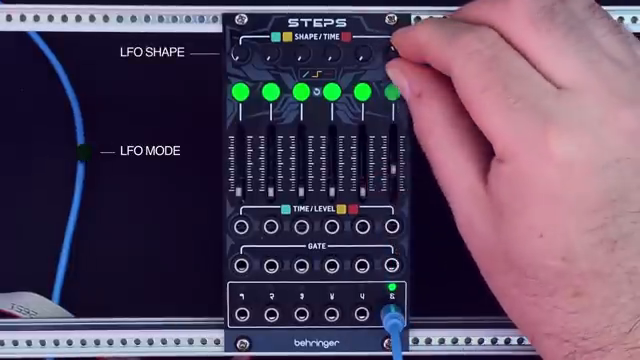
"With the upper knob, you can change the shape of the modulation from a rising ramp to a triangle to square."
© Screenshot/Quote: Behringer (YouTube)
Chaining for Modular Mayhem
Behringer highlights the ability to chain up to six Steps modules together, opening the door to sprawling modulation architectures. In a small rack, a single Steps can cover most CV duties, but in a larger system, chaining modules allows for elaborate, multi-stage envelopes, complex sequencer patterns, or parallel modulation streams.
The video suggests that this scalability is a game changer for users who want to grow their system over time. By patching multiple modules in series, users can create intricate modulation networks that would otherwise require a tangle of separate envelopes, LFOs, and sequencers. It’s a nod to the modular ethos: start small, expand as your patching ambitions grow.
The Experimental Edge: Feedback and Beyond
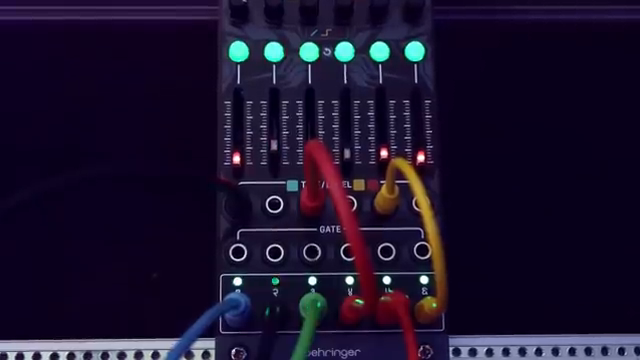
"Steps is the Swiss army knife of modulation."
© Screenshot/Quote: Behringer (YouTube)
The closing moments of the video lean into the experimental spirit that defines modular synthesis. Behringer encourages users to route the output of one step into another, or to set up feedback loops within the module itself. This opens up a world of evolving, self-modulating patterns and unpredictable results—catnip for the adventurous patcher.
Steps is positioned as a true Swiss army knife for modulation, with the only real limit being the user’s willingness to experiment. Whether you’re after classic shapes or wild, feedback-driven chaos, the module’s design invites exploration. For those who see their rack as a laboratory, Steps looks like a worthy addition.
This article is also available in German. Read it here: https://synthmagazin.at/behringer-steps-das-schweizer-taschenmesser-der-modulation-fuer-eurorack-tueftler/
Watch on YouTube:
Latest articles
Watch on YouTube:
Visit the channel:
https://www.youtube.com/behringer
https://www.youtube.com/behringer
Links from behringer:
website: https://www.behringer.com
facebook: https://www.facebook.com/Behringer
twitter: https://twitter.com/BEHRINGER
instagram: https://instagram.com/Behringer