Behringer steps into the field recording arena with the FLOW 4V, a 10-track powerhouse designed for creators, filmmakers, and anyone who needs flawless, multi-track audio in unpredictable environments. Developed by the same German team behind the X32 and WING consoles, the FLOW 4V promises not just pristine sound capture, but also a workflow-centric approach to timecode syncing and post-production ease. In this video, Behringer showcases how their latest device tackles the chaos of location sound, leveraging dual-gain preamps, 32-bit float recording, and a suite of real-time processing tools. We take a close look at what’s genuinely new here—and where the FLOW 4V’s architecture stands out in a crowded field recorder market.

17. January 2026
LYRA
Behringer FLOW 4V: Field Recording Certainty, Engineered for the Real World
Certainty in the Field: FLOW 4V’s Mission
The Behringer FLOW 4V enters the scene as a 10-track field recorder, purpose-built for content creators, videographers, and documentary teams who demand more than just basic audio capture. The video opens with a dramatization of the unpredictable dynamics on set—whisper-quiet dialogue, sudden outbursts, and the ever-present risk of missed takes due to gain misjudgment. Behringer positions the FLOW 4V as a solution to these classic headaches, promising a level of certainty rarely found in location sound.
What sets the FLOW 4V apart, according to Behringer, is its focus on real production workflows. Not only does it cater to film and documentary professionals, but it also targets streamers and solo creators who need reliable, multi-track audio without the stress of constant manual adjustments. The device is introduced as both robust and accessible, with the promise of flawless multi-track recording and seamless timecode integration at its core.

"And that's exactly why I'm excited to show you this. The brand new Behringer Flow 4V."
© Screenshot/Quote: Behringer (YouTube)
Dual-Gain Preamps and 32-Bit Float: The Signal Path Revolution
"Flow 4V solves that once and for all. It uses new ultra-low noise preamps, two independent analog signal paths, each with its own AD converter."
© Screenshot/Quote: Behringer (YouTube)
At the heart of the FLOW 4V are four innovative mic preamps that break from tradition. Unlike typical preamps, these do not require manual gain setting—a bold move that initially seems counterintuitive. The video explains that each preamp employs two independent analog signal paths, each with its own AD converter: one optimized for capturing delicate, quiet details, the other for handling high SPL peaks. This dual-path architecture is then merged in the digital domain, resulting in a true 32-bit float signal.
The practical upshot is a staggering 142 dB of dynamic range, allowing users to capture everything from the faintest whisper to the loudest shout without fear of clipping or noise floor issues. Gain decisions can be made later in post-production, freeing the user from the anxiety of real-time adjustments. The physical knobs on the device, meanwhile, are dedicated solely to controlling the digital fader for the internal stereo mix and monitoring—reflecting a workflow designed for both flexibility and peace of mind.
Mixing Tools Onboard: Filters, EQ, Dynamics, and AutoMix
The FLOW 4V isn’t just a recorder—it’s a compact mixing environment. Each channel is equipped with proper filters, EQ, and dynamics processing, giving users the tools to shape a controlled, production-ready sound directly on the device. This is particularly valuable for fast-paced shoots or live streaming scenarios where a clean mix is needed immediately.
A standout feature is the AutoMix function, which employs a real-time gain-sharing algorithm. By analyzing which microphone is active, AutoMix automatically allocates gain to the speaker and attenuates the others, producing a polished stereo mixdown on tracks 9 and 10. This approach enables users to walk away with both isolated tracks for detailed post work and a strong, ready-to-use program mix—streamlining both editing and live workflows.
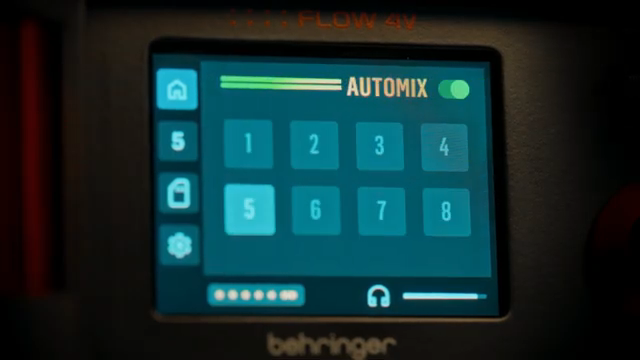
"It runs a real-time gain-sharing algorithm. It analyzes who's actually speaking, allocates gain to the active mic, and then attenuates the others."
© Screenshot/Quote: Behringer (YouTube)
Timecode Sync: Lock, Generate, and Never Drift
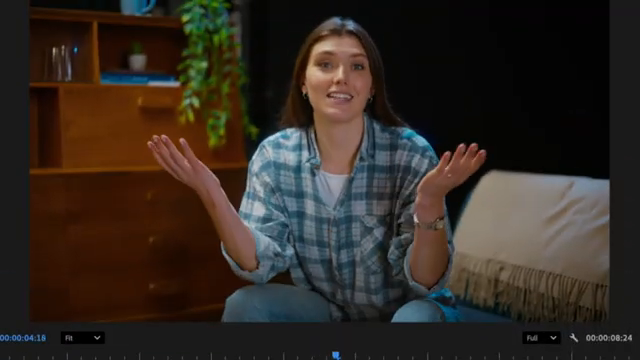
"No clapping, no sync by waveform, no drift, no guessing."
© Screenshot/Quote: Behringer (YouTube)
Timecode sync is often the Achilles’ heel of multi-camera productions, but the FLOW 4V aims to make it a non-issue. The device can automatically lock to incoming timecode and start or stop recording in sync with external sources. Alternatively, it can generate its own timecode, allowing cameras and other devices to follow its lead.
This frame-accurate timing ensures that all files—audio and video—remain perfectly aligned throughout the production and post-production process. The video emphasizes the elimination of manual syncing, clapping, or waveform matching, promising a workflow where sync is simply never a concern. For solo operators and small crews, this translates to less stress and more focus on creative tasks.
Workflow Extras: Buffering, Backup, and Wireless Monitoring
Beyond its core recording and mixing capabilities, the FLOW 4V is packed with features that enhance its adaptability in the field. A pre-record buffer ensures that critical moments aren’t missed, even if the record button is pressed a fraction too late. Automatic media backup provides an extra layer of security against data loss—a must for high-stakes shoots.
Bluetooth monitoring and multi-channel USB audio expand the device’s utility, allowing for wireless listening and easy integration with computers or mobile devices. The FLOW 4V app further extends control and configuration options, rounding out a package that’s clearly engineered for real-world, high-pressure environments where reliability and flexibility are paramount.
This article is also available in German. Read it here: https://synthmagazin.at/behringer-flow-4v-feldaufnahme-mit-gewissheit-fuer-die-echte-welt-gebaut/
Watch on YouTube:
Latest articles
Watch on YouTube:
Visit the channel:
https://www.youtube.com/behringer
https://www.youtube.com/behringer
Links from behringer:
website: https://www.behringer.com
facebook: https://www.facebook.com/Behringer
twitter: https://twitter.com/BEHRINGER
instagram: https://instagram.com/Behringer
Sponsored links:
If you purchase via these links, we may earn a small commission – at no extra cost to you. The link opens an Amazon keyword search, and results may vary depending on availability.
Behringer FLOW 4V
🔗 Check price on Amazon
🔗 Check price on Amazon