Bastl Instruments, the Czech modular mavericks, dive deep into the LFO capabilities of their Neo Trinity module in this hands-on video. With Václav at the helm, viewers are treated to a thorough exploration of modulation shapes, synchronisation tricks, and the subtle art of waveform smoothing. The Neo Trinity isn’t just another LFO box—it’s a modulation powerhouse designed for Eurorack tinkerers who crave rhythmic complexity and organic movement. This video walks through practical patching, creative automation, and advanced CV interplay, all with Bastl’s signature blend of musicality and technical depth.

7. May 2024
MILES
Bastl Instruments Neo Trinity: LFO Mode – Modulation Mayhem Unleashed
LFOs: The Beating Heart of Neo Trinity
The video opens with Václav introducing the Neo Trinity as a potent source of modulation, with a particular focus on its LFO mode. Right from the outset, the emphasis is on using the module to create dynamic, evolving sounds and rhythms—ideal fodder for any patch-hungry modular enthusiast. The demonstration starts with a classic filter sweep, immediately showcasing how the Neo Trinity’s LFO can inject movement and life into a static sound.
What stands out is the sheer range of the LFO, which can crawl at glacial speeds or zip up to audio rate. This flexibility means the Neo Trinity isn’t just for slow, wobbly modulations; it can also venture into FM territory or generate percussive textures. Bastl’s presentation style is direct and practical, focusing on what the module actually does in a patch rather than just listing specs.
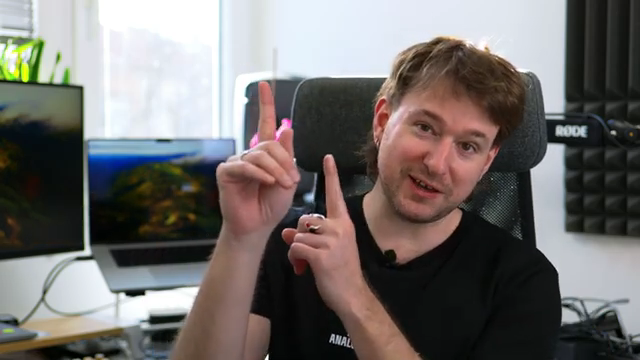
"There are several ingredients at your disposal to make spicy modulations."
© Screenshot/Quote: Bastlinstruments (YouTube)
Shapes, Sync, and Smoothing: Modulation on Your Terms
"So let's look at A, which is a saw."
© Screenshot/Quote: Bastlinstruments (YouTube)
Neo Trinity’s LFOs offer a buffet of shapes: triangle, saw, ramp, pulse, and random, each accessible via a simple shift-and-button combo. The addition of smoothing—activated with the F button—transforms sharp edges into more organic curves. For instance, a triangle morphs into a sine, and a pulse becomes a rounded, click-free wave, which is especially handy when modulating sensitive destinations like VCAs or delays.
Synchronisation is equally straightforward. By holding shift and pressing clock, users can lock the LFO to an external clock, with the rate knob acting as a divider. This opens up rhythmic modulation possibilities, from subtle groove enhancements to clocked sample-and-hold effects. The ability to toggle between unipolar and bipolar modes further extends the Neo Trinity’s usefulness, ensuring compatibility with a wide range of Eurorack modules.
Real-World Patching: Filters, VCAs, and Automated Mayhem
The video doesn’t just talk theory—it’s all about practical application. Václav demonstrates how different LFO shapes and modes can be used to modulate a filter cutoff, with smoothing eliminating unwanted clicks and making the movement more musical. Switching to VCA modulation, the importance of unipolar mode becomes clear, as VCAs typically ignore negative voltages. This attention to real-world patching is a hallmark of Bastl’s approach.
Automation takes centre stage as Václav records LFO resets and rate changes, building looping modulation sequences that evolve over time. The workflow is hands-on and immediate: hold, twist, tap, and you’ve got complex modulations running. These features make the Neo Trinity not just a source of movement, but a tool for crafting intricate, repeatable modulation patterns without external sequencers.

"And now I have this quite complex modulation sequence going."
© Screenshot/Quote: Bastlinstruments (YouTube)
CV Interplay: Where Modulation Gets Wild

"Definitely very organic feeling type modulation."
© Screenshot/Quote: Bastlinstruments (YouTube)
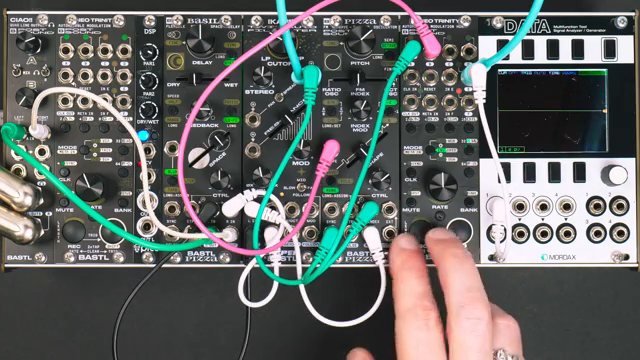
The final stretch of the video dives into the Neo Trinity’s CV inputs, revealing a playground for advanced modulation. By routing the clock output to a channel’s input and selecting sample-and-hold mode, Václav conjures staircase-like modulations—perfect for stepped filter movements or sequenced effects. Swapping the clock for another LFO channel introduces interference patterns, resulting in semi-random, evolving shapes that feel both patterned and organic.
Things get even more interesting when one LFO modulates the speed of another, creating exponential rhythms and warping triangle shapes into new territories. Fine-tuning the frequencies and ratios between channels yields a wealth of organic, almost acoustic-feeling modulations. The Neo Trinity’s ability to self-patch—feeding a channel’s output back into its own input—unlocks exponential and logarithmic curves, from sharp spikes to gothic arches, all under voltage control.
The pièce de résistance is amplitude modulation between channels, where one LFO controls the level of another, as visualised on an oscilloscope. This opens the door to truly complex, evolving modulation landscapes—especially when combined with automation. Bastl’s demo makes it clear: the Neo Trinity is a deep well for anyone who wants to push modulation beyond the basics and into the realm of controlled chaos.
This article is also available in German. Read it here: https://synthmagazin.at/bastl-instruments-neo-trinity-lfo-modus-modulationswahnsinn-entfesselt/
More articles about these products:
Watch on YouTube:
Latest articles
Watch on YouTube:
Visit the channel:
https://www.youtube.com/bastlinstruments
https://www.youtube.com/bastlinstruments
Links from bastlinstruments:
linkinbio: https://linkin.bio/bastlinstruments
instagram: https://instagram.com/bastlinstruments
facebook: https://facebook.com/bastlinstruments
twitter: https://twitter.com/bastlinstrument
soundcloud: https://soundcloud.com/bastl-instruments
Sponsored links:
If you purchase via these links, we may earn a small commission – at no extra cost to you. The link opens an Amazon keyword search, and results may vary depending on availability.
Bastl Instruments NEO TRINITY
🔗 Check price on Amazon
🔗 Check price on Amazon