Bastl Instruments, never content to leave a good circuit alone, have unleashed a firmware update for the Kastle 2 series that drags these pocket-sized digital oddballs into the MIDI age. This video manual, delivered with typical Bastl flair, walks us through the new USB MIDI connectivity—turning the Kastle 2 into both a uniquely expressive instrument and a surprisingly capable MIDI controller. From channel assignments to CC mappings and DAW integration, the update promises to open up a whole new patch bay of creative possibilities for modular tinkerers and DAW-heads alike. Let’s see just how deep the MIDI rabbit hole goes.
27. August 2025
MILES
Bastl Instruments Kastle 2: MIDI Mutation and Modular Mischief
Kastle 2: Now with MIDI—A New Patch in the Matrix
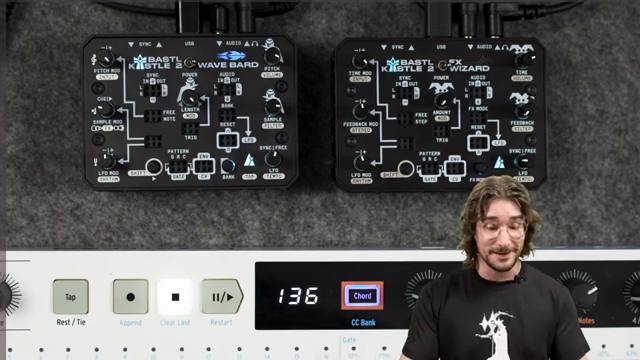
Bastl Instruments’ Kastle 2, already a darling among portable synth enthusiasts, receives a significant firmware update that adds USB MIDI support to its arsenal. This move answers one of the community’s most persistent requests, bringing a new dimension of control and integration to the Kastle’s quirky digital heart. The update covers both the WaveBard and FX Wizard variants, ensuring that MIDI connectivity is robust and, in the words of the video, “super duper fun.”
With this update, the Kastle 2 isn’t just a standalone noise machine—it’s now a bridge between modular patching and the world of MIDI sequencing. The device can be played and modulated via MIDI, but it also doubles as a MIDI controller, sending data back to your DAW or hardware rig. This dual role is a rare treat in such a compact box, and it’s clear Bastl are keen to keep the Kastle’s idiosyncratic workflow intact even as they expand its feature set.
"It really complements what these devices already have going on and it adds a universe of new possibilities and features for you to play with."
© Screenshot/Quote: Bastlinstruments (YouTube)
MIDI Settings: Channel Surfing and Mode Madness
"These devices can actually send MIDI out over USB as well."
© Screenshot/Quote: Bastlinstruments (YouTube)
The video dives into the new MIDI settings, starting with how to assign MIDI channels—a process that’s refreshingly hands-on. Users can either let the Kastle 2 learn a channel by sending it a MIDI message or manually set the channel by a series of button presses, with LED flashes confirming your selection. This approach keeps things tactile and immediate, in line with Bastl’s ethos of accessible design.
Beyond channel assignment, the Kastle 2 responds to a range of MIDI messages: note on, CC, pitch bend, mod wheel, and clock. Notably, velocity and note off are ignored, keeping the focus on real-time modulation and sequencing. The MIDI channel applies to both input and output, and the device can send MIDI out over USB—a feature that’s explored later in the video. Clock handling is flexible, with a “clock pyramid” hierarchy: MIDI sync trumps external and internal sync, and users can choose to ignore MIDI or analog clock as needed. This makes the Kastle 2 adaptable to a variety of setups, whether it’s the master clock or a sync’d satellite.
MIDI in the Wild: Notes, Clocks, and DAW Integration
Once the MIDI plumbing is sorted, the Kastle 2 shows off its new tricks. MIDI notes can switch FX modes or trigger samples, with the bottom four octaves of a keyboard mapped to specific functions—delays, stutters, and more. Mod wheel and CC assignments let you manipulate parameters in real time, and the video demonstrates how you can assign CCs to virtually every function, including shift-layered controls. There’s even a handy CC 121 “reset all controllers” command, acting as a panic button to restore sanity after a wild MIDI ride.
The integration with DAWs is particularly strong. The Kastle 2 can send MIDI data back to your computer, allowing for creative feedback loops between hardware and software. The video walks through Ableton Live setup, showing how to route note and CC data, automate parameters, and use MIDI effects for intricate control. This opens up precise, repeatable automation and sequencing, making the Kastle 2 a surprisingly capable MIDI interface for its size.
Clock and pitch handling are nuanced: MIDI pitch combines note, free input, fine tune, and pitch bend, while “patch pitch” factors in CV and knob positions. The interplay between MIDI and patch bay is highlighted, encouraging users to blend digital and analogue workflows for maximum sonic mischief.
Performance Tricks: Kastle 2 as MIDI Controller and FX Manipulator
The Kastle 2 isn’t just a MIDI receiver—it’s a hands-on controller in its own right. The video demonstrates using the Kastle’s knobs to send CC data to a DAW, effectively turning it into a compact MIDI controller. Assigning parameters in Ableton is straightforward, and the Kastle’s unique knob response (with some clever value scaling at noon) adds a layer of performance nuance.
Beyond basic control, the Kastle 2’s MIDI output can be used to sequence external gear or software instruments, with the WaveBard offering additional sample bank tricks. The device’s ability to translate CV and gate inputs into MIDI messages means it can serve as a rudimentary CV-to-MIDI interface—handy for modular users looking to bridge worlds. The video also explores using the Kastle 2 to manipulate effects processing, switching banks and tweaking parameters on the fly for dynamic live sets.
Innovative performance techniques abound, from using arpeggiators and sequencers to stacking MIDI and patch bay modulation. The Kastle 2’s flexibility encourages experimentation, and the video’s patch examples show just how quickly you can jump between sample banks, effects, and control assignments in a live context.
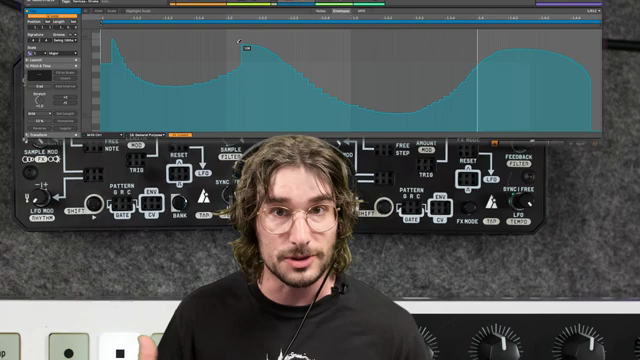
"You'll notice that we are getting CC messages sent into Ableton."
© Screenshot/Quote: Bastlinstruments (YouTube)
Firmware Futures: New Possibilities for Patchers and Performers
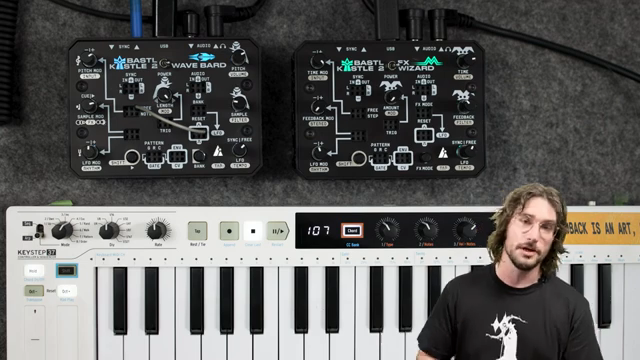
"When you're playing with the MIDI stuff, don't forget about the patch bay because there's a lot of power that you can access by stacking both of these tools together."
© Screenshot/Quote: Bastlinstruments (YouTube)
This firmware update isn’t just a technical upgrade—it’s an invitation to rethink how the Kastle 2 fits into your setup. The video’s closing section highlights creative use cases, such as loading tuned samples for acid stabs, sequencing them precisely via MIDI, and layering modulation from both the patch bay and MIDI CCs. The ability to combine internal pattern generators, synced clocks, and external MIDI control makes for a potent hybrid instrument.
Bastl’s open, community-driven ethos shines through: users are encouraged to explore the new MIDI manual, experiment with patching and sequencing, and share their discoveries. The update transforms the Kastle 2 from a quirky standalone box into a versatile hub for sound design, performance, and modular integration—a testament to Bastl’s ongoing commitment to creative mischief.
This article is also available in German. Read it here: https://synthmagazin.at/bastl-instruments-kastle-2-midi-mutation-und-modularer-schabernack/
Watch on YouTube:
Latest articles
Watch on YouTube:
Visit the channel:
https://www.youtube.com/bastlinstruments
https://www.youtube.com/bastlinstruments
Links from bastlinstruments:
linkinbio: https://linkin.bio/bastlinstruments
instagram: https://instagram.com/bastlinstruments
facebook: https://facebook.com/bastlinstruments
twitter: https://twitter.com/bastlinstrument
soundcloud: https://soundcloud.com/bastl-instruments
Sponsored links:
If you purchase via these links, we may earn a small commission – at no extra cost to you. The link opens an Amazon keyword search, and results may vary depending on availability.
Kastle 2
🔗 Check price on Amazon
🔗 Check price on Amazon
Kastle 2 FX Wizard
🔗 Check price on Amazon
🔗 Check price on Amazon
Kastle 2 WaveBard
🔗 Check price on Amazon
🔗 Check price on Amazon