What if the heartbeat of electronic music was more than just a pulse? Bahadırhan Koçer, philosopher of sound and architect of groove, invites us to drift through the molecular fog of the kick drum. In this immersive exploration, he unravels the kick’s role as both a physiological anchor and a cultural architect, tracing its journey from primal thud to programmable code. Prepare to feel the resonance in your bones and the architecture of time itself shift beneath your feet. This is not just a tutorial—it’s a meditation on the very laws that govern movement, meaning, and the magnetic pull of rhythm.
2. November 2025
LUMINA
Bahadırhan Koçer: The Kick Drum as Sonic Lawgiver
Groove’s Pulse: Time and the Body
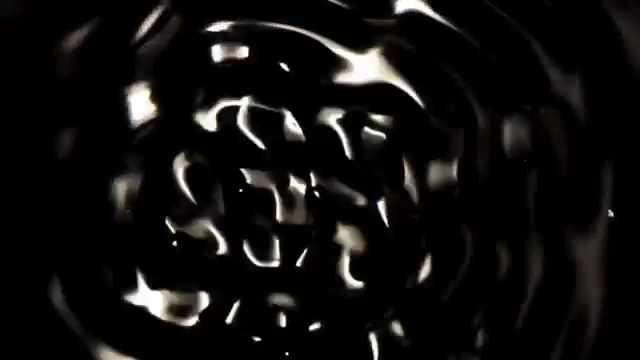
The video opens not with a drum, but with boiling water—molecules rebelling, pressure mounting, a metaphor for the latent energy of rhythm. Bahadırhan Koçer draws us into the sonic ether, where the kick drum is not just a sound but a contract, a pact that binds our perception of time to a physical pulse. The groove emerges as an agreement, a magnetic resonance between mind and vibration, where the kick’s presence defines the very spine of the musical moment.
Time, in Koçer’s narrative, is a malleable substance—bending, unraveling, or crystallizing around the steady thud of the kick. At 70 beats per minute, the pulse synchronizes with the human heart, rooting the listener in a primal, bodily awareness. The absence of the kick lets time seep away, dissolving into formlessness, while its presence draws a line through the fog, organizing chaos into order. Here, the kick is not merely heard; it is lived, felt, and embodied.
Sub, Thump, Click: Anatomy of Impact
Koçer peels back the skin of the kick drum, revealing a triptych of sonic gestures—sub, thump, and click—each with its own tactile and emotional resonance. The sub, oscillating between 30 and 60 Hz, slips beneath the threshold of hearing and becomes a gravitational force, stirring the viscera and rooting time within the body. This is the nebula drone, the ghostly undercurrent that moves us before we know we’re moving.
Above the sub, the thump emerges—muscular, tactile, a convergence of body and ear in the 100–200 Hz range. It is the illusion of mass, the brief bloom of impact. Then, the click: a spike at 2 kHz, a fleeting marker that crystallizes rhythm and aligns neurons. Together, these layers form a miniature cosmos of sensation, each one a brushstroke in the painting of time, each one shaping how we experience the world through sound.
"That's why the sub activates body before the brain decides its music."
© Screenshot/Quote: Bahadirhankocer (YouTube)
From Ritual to Code: The Kick Drum’s Evolution
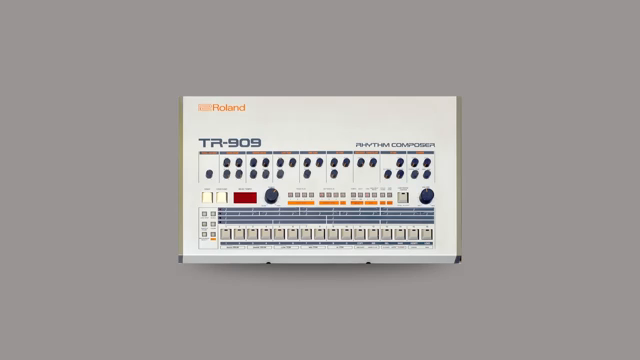
"When the kick became programmable, ritual turned into design."
© Screenshot/Quote: Bahadirhankocer (YouTube)
The journey of the kick drum is a story of transformation—from the hybrid bodies of 19th-century drummers to the circuitry of modern machines. Koçer traces its lineage, where the foot once struck skin and wood, and ritual was a collective act. The drum kit condensed orchestras into a single performer, the kick emerging as the foundation, the human metronome.
With the advent of transistors and drum machines, the kick became voltage and code, infinitely tunable and programmable. The ritual shifted from the communal to the solitary; the sequencer replaced the player. Now, a producer alone in the dark can choreograph a crowd, the kick’s authority no longer bound by flesh but by algorithm. This evolution is not just technical—it is cultural, a shift in how we organize bodies and time, how we write the laws of movement in the digital age.
The Kick as Signal and Law
In Koçer’s hands, the kick drum is more than a sound—it is a signal, a lawgiver, a miniature constitution for bodies in motion. Whether booming through club subwoofers or whispering in bedroom headphones, the kick shapes both individual intimacy and collective euphoria. Its architecture is emotional as much as physical, dictating what can be danced to, what can be felt, what can be remembered.
Tempo and timbre become ideological choices: fast kicks belong to acceleration culture, slow ones resist and reflect. Clean subs signal access and polish, distorted lows rebel with friction. The kick is a political and ethical statement, a sonic architecture that orders time and movement. In the age of algorithmic platforms and standardized loudness, Koçer asks: who owns the order of time? The designer, the venue, or the machine?
Designing the Pulse: Ableton Alchemy
The final act is a live demonstration—a ritual of synthesis inside Ableton, where the kick is sculpted from raw waveforms and magnetic resonance. Koçer begins with Operator, layering sine, triangle, and square waves to conjure sub, thump, and click. Each oscillator is tuned and blended, each envelope shaped with care, as if painting with fog and fractured light. Saturation and drum bus effects are applied, adding harmonics and body, while transient shaping and utility tools ensure clarity and stability across every system.
The process is not a recipe but an invitation to drift inside the sound, to feel the electric pulse bloom and sharpen. Koçer’s approach is tactile and poetic—he centers the low end, compresses with a gentle hand, and listens for the moment when the kick becomes both strong and transparent. The result is a kick that is full, sharp, and alive, ready to anchor any track in its gravitational field.
Yet, as with all true alchemy, some details are best experienced in the video itself. The subtle interplay of envelopes, the way harmonics shimmer and collide, the final context within a track—these are moments that words can only gesture toward. For those who wish to explore deeper, Koçer offers presets and further resources, but the real magic is in witnessing the sonic ghost take shape before our ears.
This article is also available in German. Read it here: https://synthmagazin.at/bahadirhan-kocer-die-kickdrum-als-klanggesetzgeberin/
Watch on YouTube:
Latest articles
Watch on YouTube:
Visit the channel:
https://www.youtube.com/bahadirhankocer
https://www.youtube.com/bahadirhankocer
Links from bahadirhankocer:
Sponsored links:
If you purchase via these links, we may earn a small commission – at no extra cost to you. The link opens an Amazon keyword search, and results may vary depending on availability.
Ableton Live
🔗 Check price on Amazon
🔗 Check price on Amazon
Operator
🔗 Check price on Amazon
🔗 Check price on Amazon