AudioPilz dives headfirst into the glorious underbelly of music tech with a no-prisoners look at Yamaha’s Portasound line. Forget safe nostalgia: here, we get decades of plastic chaos, accidental legends, and the odd design disaster, all shot through with AudioPilz’s trademark wit. If you think these are just toy keyboards, you’re in for a rude (and possibly funky) awakening. Pack your rave bunker – this is synth history on fast-forward.

17. October 2026
SPARKY
AudioPilz vs. Yamaha Portasounds: Toys With Teeth
Yamaha DJX, Yamaha Portasound PSR6700, Yamaha Portasound PSS-30, Yamaha Portasound PSS-380, Yamaha Portasound PSS-390, Yamaha Portasound PSS-470, Yamaha Portasound PSS-480, Yamaha Portasound PSS-570, Yamaha Portasound PSS-680, Yamaha Portasound PSS-780, Yamaha Portasound PSSF30, Yamaha Portasound VSS
From Lo-Fi Legends to Design Atrocities
AudioPilz storms in with a salute to the Yamaha Portasounds – those gloriously weird underdogs that have haunted living rooms and bedroom studios for over 45 years. We’re talking about a product range so sprawling, even seasoned gear heads lose track. Since 1980, Yamaha’s churned out roughly 500 different models, flooding the world with everything from tiny toys to oddball pro wannabes. The competition with Casio was fierce, but Yamaha’s trick was cramming hybrid digital-analog guts, ripped straight from their Electone organs, into small, affordable packages. That move paid off: Portasounds became a mass-market success, with millions sold and a production line that ran hotter than a toaster-fight at a synth convention.
What makes these things iconic isn’t just their ubiquity – it’s the mad mix of simplicity, built-in speakers, and a wild range of design decisions, from useful to outright bonkers. Over the decades, Yamaha sprinkled in pro features alongside the cheese, occasionally dropping an innovation nobody asked for (shout-out to the music printer on the MP1). Even the infamous DJX gets roped into the Portasound legacy here. The result? A timeline littered with both beloved classics and design disasters, all ripe for modern sampling, modding, or just plain ridicule.
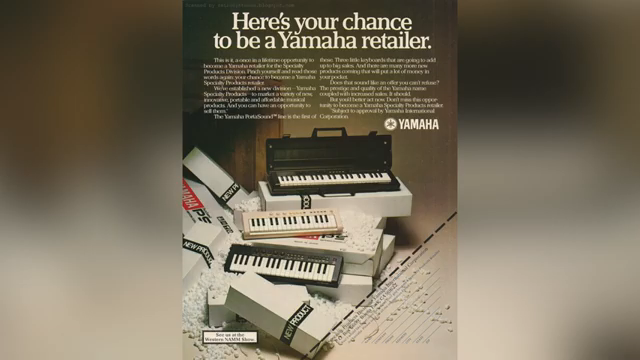
"They were churning out up to 60,000 Portasounds a day in the following years resulting in total sales of 60 million units over the decades."
© Screenshot/Quote: Audiopilz (YouTube)
Tech Shifts and Feature Bombs
"While especially older Rompler models deliver crunchy low-res tones you might consider useful, there are basically two types of Portasounds that are worth getting."
© Screenshot/Quote: Audiopilz (YouTube)
Not every Portasound is created equal, but some key moments keep this line from fading into meme status. First up: Yamaha’s DX7 FM synth dropped in ‘83 and changed the rules, pushing even some Portasounds into sleeper hit territory. But before you go raiding eBay, know your onions – the evolution splits between mini-key PS/PSS models and the bulkier, workstation-style PSR series. The PSRs went full semi-pro, but the real action for dirty synth heads is in the smaller, tweakier units.
Most early Portasounds are preset-heavy with limited tweakability, but there’s a low-fi charm that still slaps for modern producers. Some models, like the PSS-30, spit out digital square waves straight out of a vintage game console. Others are pure sample-based romplers, crunchy and lo-fi but mostly untouchable unless you’re into circuit bending. The true gems? VSS models with sampling options (think Casio SK-1 on a budget) and the FM-equipped PSS range. Don’t expect DX7 firepower – these are mostly two-operator FM engines, but in the right hands, they’re absolute street weapons.
Portasound Power Players: The PSS-680 and Friends
Time to single out the big hitters. AudioPilz zeroes in on the PSS-680, a 1990s legend that’s both a pro tool and a playground. Why does it matter? MIDI trio for hooking into modern rigs, a user interface that actually lets you get at the FM parameters, and enough tweakability to satisfy even the most jaded hardware hoarder. Many FM Portasounds are locked-down, but the 680 gives you access to pitch, envelopes, feedback – the works. And yes, the presets are as cheesy as a rave afterparty, but there’s gold lurking if you know where to look.
The FX section is spartan but effective: stereo chorus, portamento, vibrato, and a reverb/sustain that’s probably just envelope trickery. Drums are lo-fi PCM, sequencer is basic but fun, and you even get a pitch wheel and multi-timbrality via MIDI (with some caveats). The mini keys? Still terrible, but you’re not here for the ergonomics. If you need more hands-on FM, check the PSS-380/390 or the early 470/570, but note: no MIDI there. For programmable FM plus MIDI, it’s the 680, its 780 sibling, or maybe the 480/580 if you’re very lucky. Prices? Still bargain territory for what you get.

"The mini keys royally suck but there's a pitch wheel, 12 frequencies of polyphony and you can switch the instrument to sound source mode which allows you to implement multi-timbrality and velocity via MIDI, but deactivates most front panel controls including the FM UI."
© Screenshot/Quote: Audiopilz (YouTube)
On Stage, In Class, Or Just for Laughs
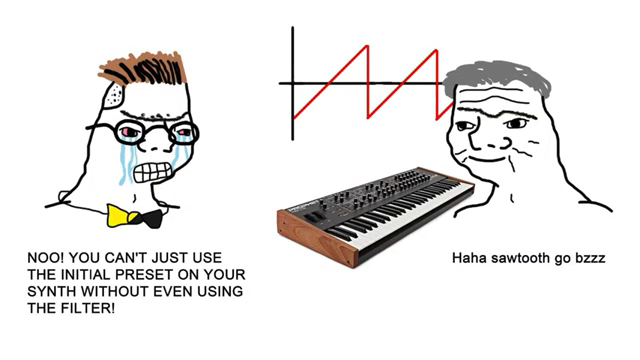
"Most probably not, but they work great for genres like 2-step jungle or synthwave, are great educational tools for learning FM and if you are on the quest for an affordable keyboard to fill that bottom spot of your jazz bus stand you now know what to look for."
© Screenshot/Quote: Audiopilz (YouTube)
Let’s get real: a Portasound won’t replace your vintage poly or your modern workstation. But for certain genres – 2-step, jungle, synthwave – they’re the secret sauce for raw, characterful tracks. The educational angle is strong too: these are brilliant tools for learning FM synthesis without melting your brain with deep menus. They’re also a cheap way to fill that bottom tier of your studio stand or jazz up a live rig with some unpredictable flavour.
AudioPilz doesn’t pretend these toys can do it all, but he shows how even a single Portasound can carry a track with the right mindset. If you’re after affordable weirdness or a shortcut to lo-fi bliss, you could do a lot worse than grabbing one of these plastic beasts.
Want the Funk? Watch the Madness
You’ve read the lowdown, but if you want to hear these things bark, squeal, and thump, you need to see AudioPilz in action. The live jam at the end is pure Portasound mayhem – something text alone can’t capture. Go watch, get inspired, and maybe join the cult of plastic keys. Just don’t blame us when you end up with a pile of Yamaha toys and a very angry spouse.
This article is also available in German. Read it here: https://synthmagazin.at/audiopilz-vs-yamaha-portasounds-spielzeug-mit-biss/
Watch on YouTube:
Latest articles
Watch on YouTube:
Visit the channel:
https://www.youtube.com/AudioPilz
https://www.youtube.com/AudioPilz
Links from AudioPilz:
Become a Patreon: https://patreon.com/audiopilz
Instagram: https://instagram.com/audio.pilz
Sponsored links:
If you purchase via these links, we may earn a small commission – at no extra cost to you. The link opens an Amazon keyword search, and results may vary depending on availability.
Yamaha DJX
🔗 Check price on Amazon
🔗 Check price on Amazon
Yamaha Portasound PSR6700
🔗 Check price on Amazon
🔗 Check price on Amazon
Yamaha Portasound PSS-30
🔗 Check price on Amazon
🔗 Check price on Amazon
Yamaha Portasound PSS-380
🔗 Check price on Amazon
🔗 Check price on Amazon
Yamaha Portasound PSS-390
🔗 Check price on Amazon
🔗 Check price on Amazon
Yamaha Portasound PSS-470
🔗 Check price on Amazon
🔗 Check price on Amazon
Yamaha Portasound PSS-480
🔗 Check price on Amazon
🔗 Check price on Amazon
Yamaha Portasound PSS-570
🔗 Check price on Amazon
🔗 Check price on Amazon
Yamaha Portasound PSS-680
🔗 Check price on Amazon
🔗 Check price on Amazon
Yamaha Portasound PSS-780
🔗 Check price on Amazon
🔗 Check price on Amazon
Yamaha Portasound PSSF30
🔗 Check price on Amazon
🔗 Check price on Amazon
Yamaha Portasound VSS
🔗 Check price on Amazon
🔗 Check price on Amazon