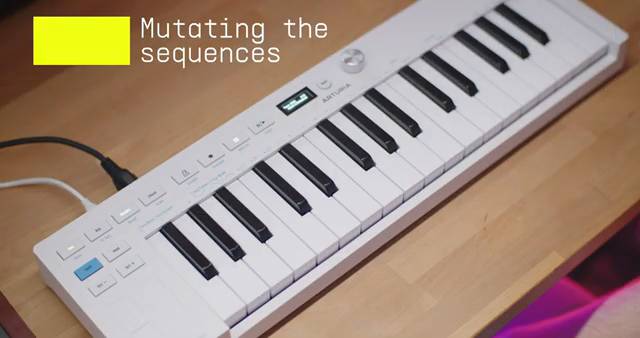
Arturia’s KeyStep Mk2 isn’t just another MIDI controller—it’s a creative catalyst for evolving musical ideas. In this official walkthrough, Arturia demonstrates how the Mutate feature transforms static sequences and arpeggios into dynamic, ever-changing patterns. The video focuses on how Mutate, combined with automation and scale locking, can inspire new directions in both studio and live contexts. For digital-centric producers and performers, this is a deep dive into how architecture and workflow intersect on a compact, performance-ready sequencer.
15. November 2025
LYRA
Arturia’s KeyStep Mk2: Mutate Your Sequences, Evolve Your Workflow
Mutate: The Evolution Engine
Arturia opens with a clear mission: the KeyStep Mk2’s Mutate function is designed to push sequences and arpeggios beyond their static origins. Rather than simply replaying programmed notes, Mutate acts as a creative engine, introducing subtle or dramatic variations while maintaining the core feel of the original pattern. This approach is about more than randomization; it’s about controlled evolution that keeps musical intent intact.
The video positions Mutate as a tool for spontaneous inspiration. Whether you’re jamming or looking for that elusive spark to turn a loop into a track, the feature is presented as a bridge between happy accidents and purposeful composition. Arturia’s presentation style is direct, focusing on workflow and immediate results rather than deep menu diving.

"Mutate lets you take your sequences or arpeggios and transform them into new musical ideas, while still keeping their original feel."
© Screenshot/Quote: Arturiaofficial (YouTube)
Variations on a Theme: How Mutate Works
"Each press gives you a fresh version of your sequence, always related to the original but never quite the same."
© Screenshot/Quote: Arturiaofficial (YouTube)
Engaging Mutate is as simple as pressing a button—one tap for a subtle shift, a longer hold for more radical transformation. Each press generates a new version of your sequence, always referencing the original but never repeating itself exactly. This iterative process encourages exploration, letting users cycle through variations until something clicks.
Importantly, Arturia demonstrates that you’re never locked into a mutation. With a quick Shift + Mutate command, you can revert to the original pattern at any time. This back-and-forth flexibility is particularly useful in performance settings, where you might want to alternate between familiar motifs and unexpected twists. Additional tweaks, like engaging gate and spice controls, further expand the mutation palette for those who want to mangle sequences even more.
Automation and Scale Lock: Keeping Control in Chaos
Beyond note mutations, the KeyStep Mk2 supports automation recording directly into sequences. By touching the mod wheel slider while recording, users can capture parameter changes in real time, adding another layer of movement and expressiveness to their patterns. This is a significant workflow enhancement, making sequences feel more alive and less loop-bound.
To ensure that creative chaos doesn’t lead to musical disaster, Arturia highlights the Scale Lock feature. By combining Mutate with Scale Lock (accessed via Shift + Chord), all mutations and automations remain harmonically grounded. This is especially valuable for those working in complex or unfamiliar keys, as it guarantees that every twist and turn stays musically coherent.
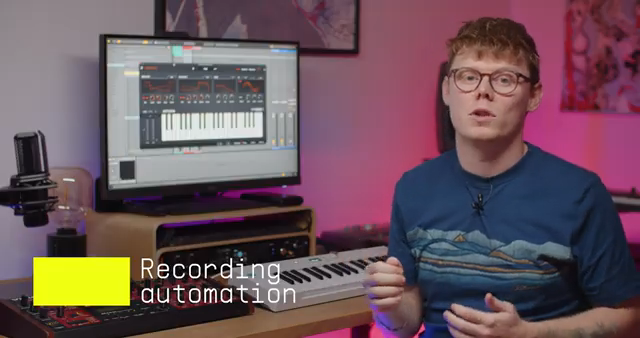
"This will record the automation of whatever parameter you're controlling inside of your instrument."
© Screenshot/Quote: Arturiaofficial (YouTube)
Mutate in Arpeggiator Mode: From Patterns to Sequences
Mutate isn’t limited to step sequences—it’s equally potent in arpeggiator mode. By activating Arp mode, playing a few notes, and then pressing Mutate, users can generate evolving arpeggiated patterns that go far beyond the typical up/down or random modes. The video demonstrates how this can quickly lead to unexpected musical territory.
Once a satisfying arpeggiated mutation is found, it can be converted into a sequence with Shift + Arp. This workflow bridges the gap between improvisation and composition, letting users capture spontaneous moments and turn them into building blocks for further development. The process encourages experimentation, rewarding curiosity with new melodic ideas.
Chaining Mutations: Performance and Beyond
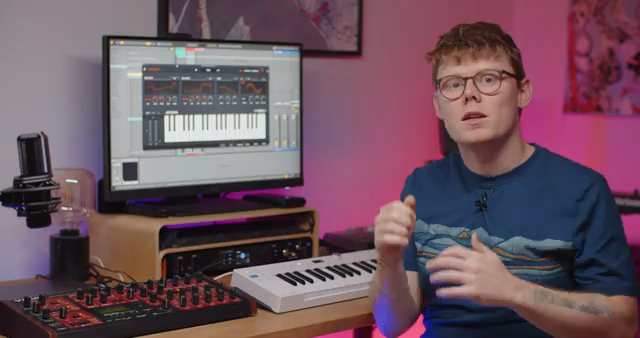
"You can chain mutated patterns together for long, flowing performances full of variation."
© Screenshot/Quote: Arturiaofficial (YouTube)
Arturia closes with practical tips for keeping performances fluid and engaging. By alternating between Mutate and recording new notes in real time, patterns remain fresh and unpredictable. This interplay ensures that sequences never become stale, supporting long, evolving jams or live sets.
Perhaps most notably, the KeyStep Mk2 allows users to chain mutated patterns together, enabling extended performances full of variation. This capability is key for those who want to explore complex soundscapes or keep audiences engaged without resorting to external sequencing or software. The Mutate feature, as presented, positions the KeyStep Mk2 as a compact but powerful hub for creative exploration.
This article is also available in German. Read it here: https://synthmagazin.at/arturia-keystep-mk2-mutationen-fuer-kreative-sequenzen-und-fliessende-performances/
Watch on YouTube:
Latest articles
Watch on YouTube:
Visit the channel:
https://www.youtube.com/ArturiaOfficial
https://www.youtube.com/ArturiaOfficial
Links from ArturiaOfficial:
website: https://www.arturia.com
instagram: https://instagram.com/arturia_official
twitter: https://twitter.com/ArturiaOfficial
soundcloud: https://soundcloud.com/arturia-official/albums
Sponsored links:
If you purchase via these links, we may earn a small commission – at no extra cost to you. The link opens an Amazon keyword search, and results may vary depending on availability.
KeyStep Mk2
🔗 Check price on Amazon
🔗 Check price on Amazon