In this deep-dive from Arturia’s official channel, Grammy-winning engineer Migui Maloles demonstrates how Bus TRANSIENT fits into the modern mixing arsenal. The focus is on enhancing a track’s punch and clarity without sacrificing the original artistic vision—a subtle but crucial distinction for anyone who cares about sonic integrity. Maloles walks us through real-world applications on drums and guitars, showcasing the plugin’s band-split architecture and intuitive controls. For those invested in digital workflow, this video also highlights how Arturia’s ecosystem of effects integrates seamlessly into established production routines, all while keeping the creative process front and center.

18. October 2025
LYRA
Arturia Bus TRANSIENT: Preserving Sonic Intent with Precision and Depth
Arturia Bus TRANSIENT, Arturia CTRL 295 EQ, Arturia June 6 Chorus, Arturia Reverb Intensity, Arturia Tape J37, Arturia Tape MeloFi
Augment, Don’t Overwrite: The Bus TRANSIENT Philosophy
Arturia positions Bus TRANSIENT not as a tool for radical reinvention, but as a means of enhancing what’s already working in a track. Migui Maloles, with his extensive experience across genres, underscores the importance of retaining the demo’s core character. The plugin is presented as a way to bring out the most vital elements—dimension, depth, and punch—without distorting the artist’s original intent.
This approach is especially relevant for mixers who want to add impact and clarity while respecting the emotional and sonic blueprint of a song. Rather than imposing a new identity, Bus TRANSIENT is about subtle augmentation, ensuring that the mix translates across systems and environments without losing its soul.
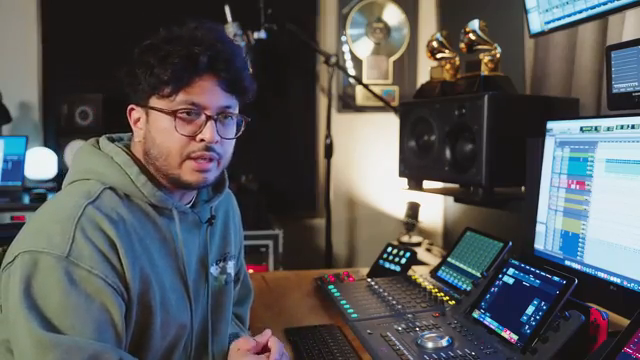
"I'm not trying to reinvent the song. I am trying to basically augment the song, bring out the most important parts, establish some dimension, establish depth, establish height, width."
© Screenshot/Quote: Arturiaofficial (YouTube)
Multiband Mastery: Independent Band Manipulation in Action
"You can split up the signal into three different bands. Each band you can manipulate independent of one another."
© Screenshot/Quote: Arturiaofficial (YouTube)
A standout feature of Bus TRANSIENT is its ability to split the signal into three independent bands, each with discrete transient and body controls. Maloles demonstrates this on a drum mix, boosting the mid-band transient for added definition and enhancing the body for warmth and decay. The top band receives extra transient to emphasize snare crack, while tone controls allow for precise spectral shaping without harshness.
The workflow here is surgical yet intuitive: each frequency range can be dialed in for exactly the right amount of attack or sustain. The plugin’s mix knob further refines the result, letting users blend processed and original signals to taste. This multiband flexibility is what sets Bus TRANSIENT apart from more basic transient shapers, giving engineers a nuanced toolkit for dynamic sculpting.
From Subtle to Significant: Shaping Instruments with Depth and Clarity
Maloles moves beyond drums, applying Bus TRANSIENT to guitars to illustrate how the plugin can add presence and realism. By targeting the top end, he brings out the pick attack, helping the part cut through the mix without sounding artificial. The body controls allow for fattening thin sources, all while maintaining a natural, musical quality.
What’s notable in the demonstration is how easy it is to go overboard with other transient shapers, resulting in clicky or unnatural artifacts. Bus TRANSIENT, by contrast, offers a refined level of control—parameters are responsive and intuitive, making it difficult to push things into unpleasant territory. The result is an instrument that sits better in the mix, with enhanced groove and clarity but no loss of authenticity.

"It's really kind of easy to go overboard with with other ones. And it's easy to make them kind of sound a little nasty and like artificially clicky, whereas with the bus transient, again, it's very natural."
© Screenshot/Quote: Arturiaofficial (YouTube)
Workflow Integration: Arturia’s Ecosystem in the Modern Studio
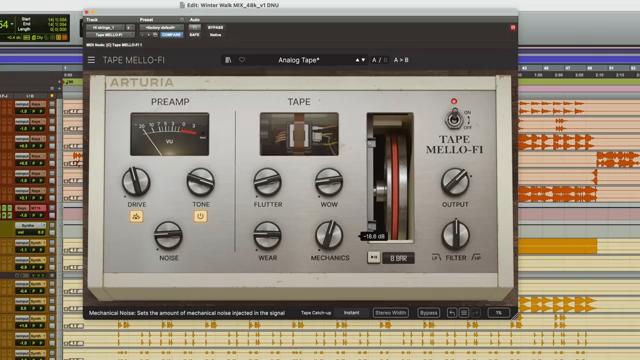
"They just make very faithful recreations of classic tools, but with a modern twist that sound really great. And I integrate them into my workflow almost every day."
© Screenshot/Quote: Arturiaofficial (YouTube)
The video takes a broader view, with Maloles reflecting on his long-term use of Arturia products. From Tape MeloFi to the Tape J37 and June 6th Chorus, he highlights how these effects have become staples in his daily workflow. The emphasis is on faithful emulations with modern enhancements—tools that sound great and are easy to integrate into both DAW-based and hybrid setups.
Bus TRANSIENT fits naturally into this ecosystem, offering the same balance of vintage inspiration and contemporary flexibility. The plugin’s interface and parameter set are designed for speed and clarity, allowing engineers to stay in the creative zone. For those who value seamless workflow and sonic consistency, Arturia’s effects suite—including Bus TRANSIENT—proves to be more than just a collection of plugins; it’s a foundation for modern sound design.
Sonic Clarity as Creative Imperative
Maloles closes by emphasizing the responsibility and privilege of shaping music that impacts listeners. For him, technical skill and creative intuition go hand in hand, with sonic clarity serving as the bridge between artistic vision and audience experience. Bus TRANSIENT—and the broader Arturia toolkit—are presented as enablers of this mission, helping engineers push boundaries while staying true to the music’s intent.
This article is also available in German. Read it here: https://synthmagazin.at/arturia-bus-transient-klangintegritaet-bewahren-mit-praezision-und-tiefe/
Watch on YouTube:
Latest articles
Watch on YouTube:
Visit the channel:
https://www.youtube.com/ArturiaOfficial
https://www.youtube.com/ArturiaOfficial
Links from ArturiaOfficial:
website: https://www.arturia.com
instagram: https://instagram.com/arturia_official
twitter: https://twitter.com/ArturiaOfficial
soundcloud: https://soundcloud.com/arturia-official/albums
Sponsored links:
If you purchase via these links, we may earn a small commission – at no extra cost to you. The link opens an Amazon keyword search, and results may vary depending on availability.
Arturia Bus TRANSIENT
🔗 Check price on Amazon
🔗 Check price on Amazon
Arturia CTRL 295 EQ
🔗 Check price on Amazon
🔗 Check price on Amazon
Arturia June 6 Chorus
🔗 Check price on Amazon
🔗 Check price on Amazon
Arturia Reverb Intensity
🔗 Check price on Amazon
🔗 Check price on Amazon
Arturia Tape J37
🔗 Check price on Amazon
🔗 Check price on Amazon
Arturia Tape MeloFi
🔗 Check price on Amazon
🔗 Check price on Amazon