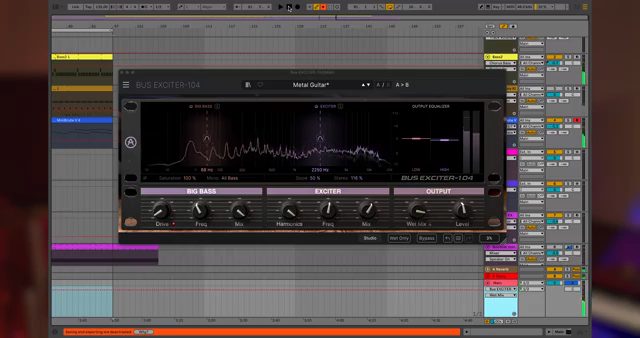
Arturia’s Bus EXCITER-104 steps into the mix as a software emulation of the classic Aphex Aural Exciter, but with a digital twist and workflow-centric enhancements. In this official walkthrough, Arturia’s Lena dives into how this effect can inject clarity, presence, and harmonic energy into your tracks—without the blunt force of a simple EQ. With both Big Bass and Exciter modules, advanced controls, and a spectral visualizer, the EXCITER-104 is positioned as a tool for both subtle polish and extreme sound design. We break down what’s actually shown: from harmonic generation to workflow features, and where the digital architecture opens new doors.
19. June 2024
LYRA
Arturia Bus EXCITER-104: Digital Excitement, Hybrid Precision
A Modern Exciter for the Digital Age
Arturia introduces the Bus EXCITER-104 as a professional-grade exciter effect, meticulously modeled after the legendary Aphex Aural Exciter hardware. The focus here is on enhancing clarity and presence in a mix, but with the flexibility and precision that only a modern software implementation can provide. The video makes it clear that this isn’t just for mastering engineers—beginners and seasoned pros alike are in the target audience, thanks to the accessible interface and workflow.
What sets the EXCITER-104 apart is its approach to harmonic enhancement. Rather than simply boosting existing frequencies, it generates new harmonics, offering a sonic result that traditional EQs simply can’t replicate. This is positioned as a way to add detail and presence to everything from vocals and bass to full drum mixes, with the added bonus of Arturia’s own exclusive settings that push the effect beyond the original hardware’s limitations.
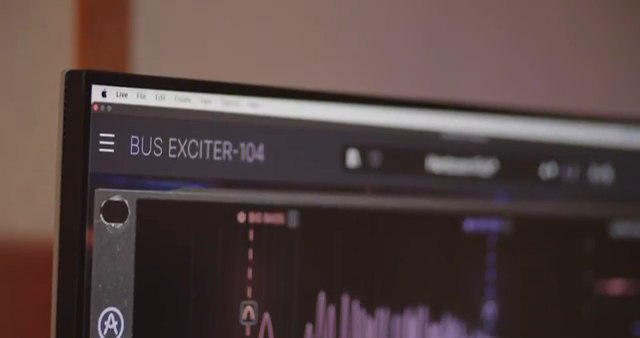
"Unlike an equalizer which boosts or attenuates existing harmonics, the Boss Exciter 104 uses diverse processes to create new harmonics, producing results unattainable through standard equalization."
© Screenshot/Quote: Arturiaofficial (YouTube)
Big Bass and Exciter: Dual Engines, Expanded Palette
The Bus EXCITER-104 is built around two main modules: the Exciter and Big Bass. The Exciter section is designed to add clarity and sheen by generating additional harmonics in the high-frequency range. Users can dial in subtle or extreme enhancements, with settings that go beyond what the original hardware offered—especially at the far end of the knob, where things get more aggressive than the classic unit ever could.
Meanwhile, the Big Bass module brings its own flavor to the low end, compressing and exciting bass frequencies for a fuller, more energetic sound. The video demonstrates how these two engines can be used independently or together, allowing users to shape both ends of the spectrum in ways that transcend standard equalization. This dual-module design is a clear nod to hybrid workflows, where sculpting both bass and treble is essential.
Dialing In: Controls and Advanced Tweaks
"These extra controls expand the Sound Palette significantly."
© Screenshot/Quote: Arturiaofficial (YouTube)
Arturia’s walkthrough highlights the EXCITER-104’s key controls, starting with frequency selection and mix ratios. The Exciter module offers a frequency knob to target the high-frequency spectrum, while the mix control determines how much processed signal is blended back into the output. For those who want more, the advanced settings open up deeper sound-shaping options, including filter resonance, stereo width, and a unique slope control that morphs the saturation character from half to full rectification.
On the Big Bass side, users get drive and frequency controls to set the strength and focus of the effect, with visual feedback provided by a drive LED. Additional advanced parameters include filter resonance, polarity inversion, saturation, and mono modes that let you collapse either just the processed or all bass signals below a cutoff to mono. The video makes a point of showing how these controls can be used to fine-tune the effect for everything from subtle enhancement to bold, creative processing.
Seeing Sound: Spectral Visualization and Feedback
A standout feature of the EXCITER-104 is its spectral visualizer, which provides real-time feedback on both wet and dry signals. The video emphasizes how this visual aid allows users to monitor exactly what’s being affected, with the processed signal overlaid on a grayed-out representation of the original audio. This makes it much easier to dial in precise settings, especially when working with complex mixes or subtle enhancements.
Solo and on/off toggles for each section further enhance the workflow, letting users isolate the processed signal or bypass sections entirely for A/B comparisons. Arturia’s inclusion of these visual and monitoring tools reflects a modern, digitally informed approach to mixing—one that values both precision and user confidence in the results.
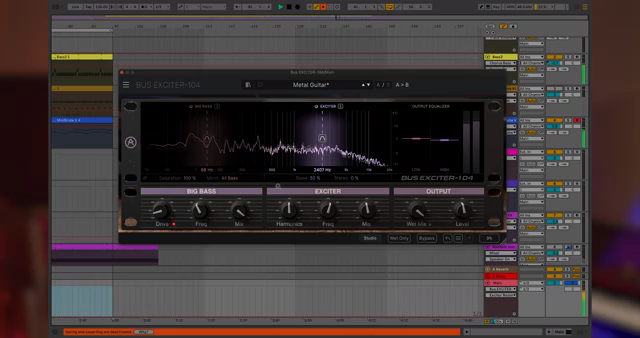
"The visualizer displays the spectral content of both wet and dry signals."
© Screenshot/Quote: Arturiaofficial (YouTube)
Creative Customization: Shaping Bass and Treble Responses
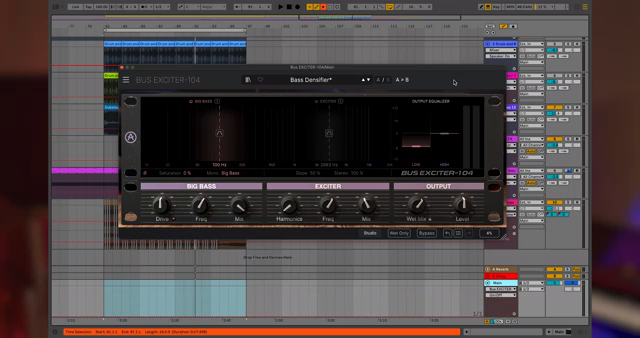
"Enable Wet Mix Lock to maintain the wet mix balance while browsing presets."
© Screenshot/Quote: Arturiaofficial (YouTube)
The Bus EXCITER-104 isn’t just about static enhancement—it’s designed for creative workflows that demand flexibility. The video shows how users can customize both bass and treble responses extensively, thanks to the advanced controls and the ability to sum, mono, or invert phase on the Big Bass section. The output stage brings it all together, with a wet/dry mix, overall level, and a two-band EQ that affects both processed and dry signals.
Notably, the Wet Mix Lock feature allows users to maintain their preferred wet/dry balance while browsing presets, a small but meaningful workflow improvement for those who like to audition sounds without losing their mix context. The final EQ stage, with its low and high shelves, can be used to further boost or compensate for changes introduced by the Exciter and Big Bass modules, ensuring a balanced and polished output.
This article is also available in German. Read it here: https://synthmagazin.at/arturia-bus-exciter-104-digitale-excitement-hybride-praezision/
Watch on YouTube:
Latest articles
Watch on YouTube:
Visit the channel:
https://www.youtube.com/ArturiaOfficial
https://www.youtube.com/ArturiaOfficial
Links from ArturiaOfficial:
website: https://www.arturia.com
instagram: https://instagram.com/arturia_official
twitter: https://twitter.com/ArturiaOfficial
soundcloud: https://soundcloud.com/arturia-official/albums
Sponsored links:
If you purchase via these links, we may earn a small commission – at no extra cost to you. The link opens an Amazon keyword search, and results may vary depending on availability.
Arturia Bus EXCITER-104
🔗 Check price on Amazon
🔗 Check price on Amazon