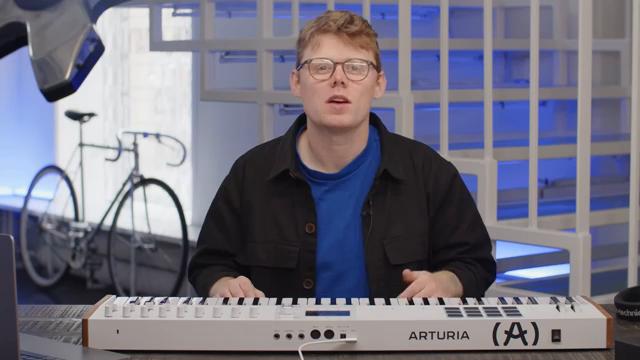
Arturia’s Augmented Series 2 is back with a vengeance, fusing sampled acoustic instruments and advanced synthesis into a single, morphable playground for composers and sound designers. In this official walkthrough, Arturia’s Matt takes us deep into the architecture, focusing on Augmented STRINGS as a showcase for the new dual-layer workflow, drag-and-drop modulation, and macro-driven performance controls. If you’re curious about how this hybrid engine stacks up for cinematic textures, evolving pads, or experimental layering, this video is a must-watch. We break down the workflow, interface, and sonic flexibility as presented—no hype, just the facts and a few nerdy asides.
25. April 2025
LYRA
Arturia Augmented Series 2: Hybrid Sound Design Reimagined
Hybrid DNA: The Augmented Series 2 Concept
Arturia’s Augmented Series 2 is introduced as a hybrid instrument, purpose-built to blend the organic richness of sampled acoustic sounds with the flexibility and depth of modern synthesis. The video centers on Augmented STRINGS, but the architecture is shared across the series, allowing users to morph between expressive, cinematic, and even otherworldly timbres. This approach is not just about stacking samples on synths—it’s about creating a seamless continuum between the two worlds, making hybrid textures accessible and playable in real time.
The instrument’s core design revolves around four sound sources, or “parts,” organized into two layers (A and B). Each part can be powered by either a multi-sampler or a synth engine, and the Morph control becomes the central axis for blending and evolving sounds. This dual-layer, multi-part structure is key to the Augmented Series’ compositional depth, encouraging users to explore new sonic territory beyond the limits of traditional sample libraries or single-engine synths.
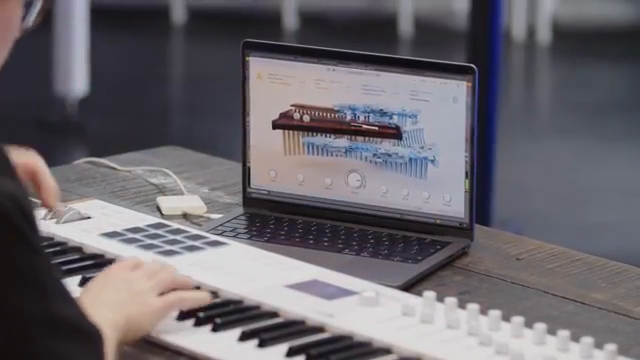
"The Augmented Series combines character-rich sampled acoustic instruments with cutting edge synthesis, morphing them into expressive, cinematic, and often otherworldly sounds."
© Screenshot/Quote: Arturiaofficial (YouTube)
Interface Deep Dive: Layers, Morphing, and Macros
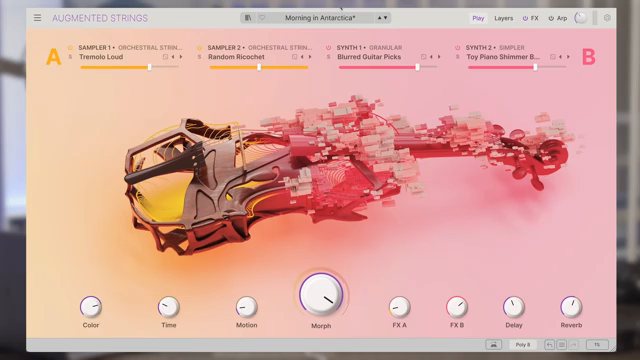
"The Morph macro is what makes Augmented instruments truly special. It blends layers seamlessly and can also be mapped to control filter cutoff, synth parameters, modulation depths, or any other destination that you choose."
© Screenshot/Quote: Arturiaofficial (YouTube)
The redesigned interface is all about immediacy and hands-on control. The Play View puts both sound layers front and center, letting users solo, mute, drag-and-drop to reconfigure parts, and even randomize each part directly from the UI. This workflow is a clear nod to modern performance instruments, prioritizing speed and flexibility over menu-diving.
At the heart of the interface is the Morph macro, which lets you blend between layers A and B for dramatic sound evolution. Supporting this are three additional macros—Color, Time, and Motion—each mapped to groups of parameters for quick, expressive tweaks. Color shapes harmonic content, Time adjusts rhythmic feel, and Motion introduces modulation and movement, making it easy to sculpt presets on the fly.
Effect macros are also present, with dedicated controls for each layer’s effects and global delay/reverb. The macro system is designed for both performance and deep editing, allowing users to customize how each macro interacts with the underlying engine. This is a workflow-centric approach that should appeal to both preset surfers and hands-on tweakers.
Workflow Upgrades: Modulation, Effects, and Arpeggiator
Augmented Series 2 brings a host of workflow enhancements, starting with a fully visual drag-and-drop modulation system. Users can assign envelopes, LFOs, macros, and MIDI controls to nearly any parameter by simply dragging sources onto targets. Modulation depth is instantly visible and adjustable, making complex routings approachable even for those new to modular-style thinking.
Effects routing has been overhauled for more flexibility. Each layer gets two insert slots, while the main output features dedicated delay and reverb. Effects can be bypassed, soloed, and modulated, and a new send routing mode lets delay and reverb blend with the dry signal—preserving dynamics and clarity. The FX selector is reorganized for easier navigation, and more parameters are now modulatable, expanding creative potential.
The arpeggiator is now a creative powerhouse, supporting per-step chance, auto-regeneration for evolving patterns, and polymetric step lengths across velocity, gate, chance, and chord lanes. Chord mode allows full chords per step, turning the arpeggiator into a pseudo-sequencer for generative textures and rhythmic pulses. These upgrades make Augmented Series 2 a serious tool for both composition and live experimentation.
"From drag and drop modulation to streamlined effects routing, this version adds powerful yet essential features, enhancing the filter section, the sample engine, and dynamic arpeggiator for a deeper creative control."
© Screenshot/Quote: Arturiaofficial (YouTube)
Sound Sources: Samplers and Synth Engines in Tandem
Flexibility is the name of the game when it comes to sound sources. Each part within a layer can be either a sampler—drawing from expertly recorded acoustic instruments and vocals—or a synth engine, with five distinct flavors: analog, granular, harmonic, simpler, and wavetable. This allows users to blend everything from traditional strings to processed, experimental textures within a single patch.
The sampler engine provides access to a range of articulations, including traditional, prepared, and heavily processed sounds. The synth engines each bring their own character: analog for classic subtractive tones, granular for sliced and rhythmic textures, harmonic for additive synthesis, simpler for creative sample manipulation, and wavetable for morphing digital timbres. This hybrid approach is central to the Augmented Series’ versatility, letting users sculpt sounds that are both familiar and futuristic.
Experimentation Encouraged: Layering, Articulations, and Modulation
The tutorial closes by urging users to experiment with different combinations of layers, articulations, and modulation routings. The architecture is deliberately open-ended, inviting both structured composition and happy accidents. Whether you’re stacking traditional and processed samples, blending synth engines, or pushing the modulation matrix to its limits, the instrument is designed to reward curiosity.
Arturia’s message is clear: the tools are there to keep you creative and inspired. While the video demonstrates the breadth of possibilities, it’s up to users to dig in, combine macros, and explore the full sonic palette that Augmented Series 2 offers.
This article is also available in German. Read it here: https://synthmagazin.at/arturia-augmented-series-2-hybrides-sounddesign-neu-gedacht/
Watch on YouTube:
Latest articles
Watch on YouTube:
Visit the channel:
https://www.youtube.com/ArturiaOfficial
https://www.youtube.com/ArturiaOfficial
Links from ArturiaOfficial:
website: https://www.arturia.com
instagram: https://instagram.com/arturia_official
twitter: https://twitter.com/ArturiaOfficial
soundcloud: https://soundcloud.com/arturia-official/albums
Sponsored links:
If you purchase via these links, we may earn a small commission – at no extra cost to you. The link opens an Amazon keyword search, and results may vary depending on availability.
Arturia Augmented Series 2
🔗 Check price on Amazon
🔗 Check price on Amazon
Arturia Augmented STRINGS
🔗 Check price on Amazon
🔗 Check price on Amazon