Arturia steps boldly into the stage keyboard arena with AstroLab, a 61-key instrument that fuses their deep software heritage with hardware performance. In this official overview, Matt Paull walks us through AstroLab’s architecture: from its curated library of over 1,300 presets—sourced from Arturia’s own award-winning synths—to its multi-layered sound design, macro controls, and live-oriented workflow. The video leans into AstroLab’s performance DNA, showing how its connectivity, effects, and navigation are engineered for seamless transitions between studio and stage. If you’re curious about how Arturia translates its virtual instrument pedigree into a hands-on, gig-ready keyboard, this is a must-watch (and a must-read for workflow nerds).
10. April 2024
LYRA
Arturia AstroLab: A Digital Stage Keyboard Ecosystem for the Modern Performer
AstroLab: Arturia’s Stage Keyboard Vision
AstroLab is introduced as Arturia’s first foray into the stage keyboard market, designed to bridge the gap between classic and modern sound exploration. The video positions AstroLab as an avant-garde instrument that leverages Arturia’s hybrid approach, blending hardware reliability with the flexibility of their software engines. This isn’t just another keyboard: it’s pitched as a solution to what Arturia sees as missing from performance-oriented instruments, with a focus on intuitive control and deep integration.
From the outset, the emphasis is on seamless performance integration. AstroLab’s 61-key semi-weighted keybed with aftertouch, built-in arpeggiator, chord and scale modes, and looping functions are all highlighted as tools for expressive, real-time sound manipulation. The hardware-software synergy is central, promising a unified experience for both stage and studio musicians.

"Astrolab is an avant-garde stage keyboard that seamlessly blends classic and modern sounds, offering an innovative stage solution for performers."
© Screenshot/Quote: Arturiaofficial (YouTube)
A Sound Library Born from Software Pedigree
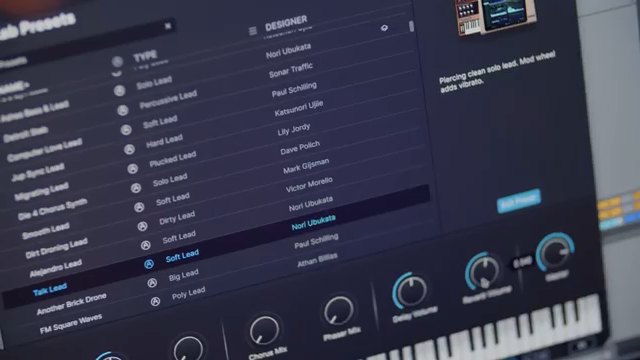
"Astrolab is powered with a curated collection of 1300 presets."
© Screenshot/Quote: Arturiaofficial (YouTube)
The heart of AstroLab is its expansive sound library, boasting over 1,300 presets meticulously curated from Arturia’s V Collection and other flagship instruments. These sounds span the essentials—pianos, organs, and strings—tailored for live performance, as well as more experimental hybrid textures, pads, leads, and sequences. The video demonstrates several presets, showcasing the instrument’s ability to move from classic stage staples to modern, genre-blending timbres with ease.
AstroLab’s library isn’t static: integration with Analog Lab, Pigments, and the Sound Store unlocks access to over 10,000 additional sounds. The video makes clear that these presets aren’t just ported over; they’re optimized for the AstroLab’s hardware, ensuring that live performers get the immediacy and nuance they need. The semi-weighted keybed, velocity sensitivity, and channel aftertouch are all presented as essential to making these sounds playable and expressive on stage.
Creative Power: Layers, Macros, and Performance Modes
AstroLab’s creative toolkit is built for layering, splitting, and real-time sound shaping. The instrument supports multi-layered sounds, allowing users to combine two presets—such as piano and bass for splits, or piano and strings for lush layers. The process is straightforward: select a sound, add a second part, and assign split points visually using the keyboard’s LEDs. Each part can be edited independently, with macros color-coded for clarity, or simultaneously for global tweaks.
Performance controls are front and center: four dedicated macros (brightness, timbre, time, and movement) provide hands-on access to core sound parameters. These are context-sensitive, adapting to the selected instrument type, and feature touch sensitivity with LED feedback. The video also details the onboard effects section—chorus, distortion, delay, and reverb—each accessible via dedicated controls and further editable through the screen. Performance modes like arpeggiator, looper, scale, and chord modes round out the toolkit, enabling everything from instant rhythmic patterns to complex harmonic textures, all designed for live manipulation.
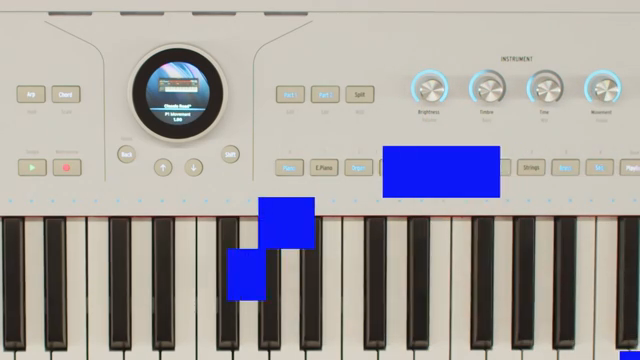
"Astrolab also allows the use and creation of multi-layered sounds composed of two sounds that can be played at the same time."
© Screenshot/Quote: Arturiaofficial (YouTube)
Connectivity: Designed for Hybrid Workflows
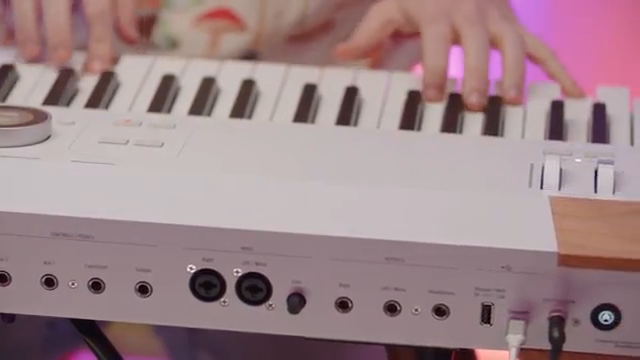
"The back panel offers a lot of connectivity options."
© Screenshot/Quote: Arturiaofficial (YouTube)
AstroLab’s back panel is a nod to modern connectivity needs, offering MIDI in/out, sustain and expression pedal inputs, and auxiliary jacks assignable to various functions like effects or arpeggiator control. There’s a stereo input for external sources—guitars, mics, or vocoder duties—complete with a gain knob, plus stereo TRS outputs and a dedicated headphone jack for monitoring.
On the digital side, AstroLab includes a USB hub for powering devices, a USB-C port for computer integration, and built-in Wi-Fi/Bluetooth for seamless connection with Analog Lab and the dedicated mobile app. The video underscores how these features enable AstroLab to serve as both a stage centerpiece and a studio hub, supporting everything from DAW integration to DAWless, hardware-centric rigs.
Navigation: Streamlined for Performance
AstroLab’s navigation system is engineered for speed and clarity, with a central rotary encoder and screen providing access to sounds, categories, favorites, soundbanks, and playlists. The video demonstrates how performers can quickly browse by type, instrument, or artist, confirm selections with a click, and use up/down arrows for menu navigation. The back button allows for easy retracing of steps, minimizing menu-diving during live sets.
This streamlined approach is designed to keep performers focused on playing rather than programming. While the video only scratches the surface of the navigation’s depth, it’s clear that Arturia has prioritized a workflow where sound selection and editing can be accomplished with minimal distraction—an essential feature for any serious stage instrument.
Watch on YouTube:
Latest articles
Watch on YouTube:
https://www.youtube.com/ArturiaOfficial
Links from ArturiaOfficial:
Sponsored links:
If you purchase via these links, we may earn a small commission – at no extra cost to you. The link opens an Amazon keyword search, and results may vary depending on availability.
🔗 Check price on Amazon