Step into the magnetic field of vintage synthesis as Alex Ball guides us through the rare and enigmatic EMS Synthi 100. This is not just a machine—it’s a cathedral of circuitry, a sonic ghost from 1971, exhaling fog and fractured light. Ball’s storytelling, as immersive as a slow-motion underwater bloom, weaves the tale of visionaries, lost treasures, and the spectral resonance of a synthesizer that shaped musical universes. For those who see sound as narrative, this video is a portal into the heart of analog myth and the hands that keep its pulse alive.

13. March 2026
LUMINA
Alex Ball Illuminates the EMS Synthi 100: A Nebula of Sonic History
A God-Tier Relic Emerges
The video opens with a sense of awe, as the EMS Synthi 100 is introduced not merely as a synthesizer, but as an artifact from the uppermost stratum of electronic music history. Alex Ball sets the stage by describing his quest for rare instruments, culminating in this encounter with the Synthi 100—a device so elusive it sits atop his personal hierarchy of vintage dreams.
The Synthi 100 is presented as a machine that transcends ordinary rarity. It is a beacon from 1971, its presence made possible through the generosity of Pete Townshend and the Townshend Studio. The introduction is not just about hardware, but about entering a sacred space where history, ambition, and sonic invention converge.
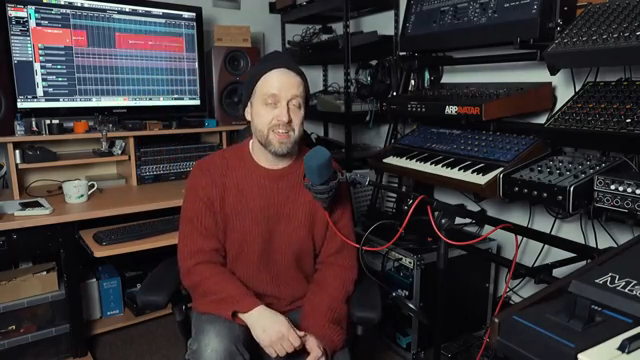
"We're going to look at something from the very top of the top tier, the EMS Synthi 100 with Vocoder 5000."
© Screenshot/Quote: Alexballmusic (YouTube)
The Architects of Electronic Dreamscapes
"He wanted a more convenient way to sequence and control sounds."
© Screenshot/Quote: Alexballmusic (YouTube)
We are drawn into the origins of Electronic Music Studios (EMS), where three visionaries—Peter Zinoviev, Tristram Carey, and David Cockrell—wove together the threads of art, science, and war-time technology. Their backgrounds are as layered as the sounds they would eventually conjure: Carey, shaped by radar and radio, Zinoviev, a mathematician with a bunker studio, and Cockrell, a technical mind whose inventions bridged eras.
Ball’s narrative paints these figures as sonic explorers, haunted by the limitations of tape and driven to invent new ways of sculpting sound. Their collaboration, fueled by necessity and imagination, gave rise to the VCS3 and ultimately the Synthi 100—a machine born from the desire to make the impossible audible. The story is one of creative restlessness, where each technical leap is a note in a larger symphony of innovation.
Inside the Machine: The Synthi 100 Unveiled
The guided tour of the Synthi 100 is a descent into a labyrinth of dials, matrices, and sonic potential. Ball reveals the architecture with reverence: eight filters, three ring modulators, voltage-controlled spring reverbs, and a pair of massive patch matrices that define the instrument’s modular soul. There is no normal signal path—each connection is a deliberate act of creation, a constellation mapped by colored pins.
We drift through the oscillator bank, where twelve voltage-controlled oscillators shimmer with possibility. The tactile vernier dials and wave-shaping controls invite hands-on exploration, while the dual matrices separate audio and control signals, offering a playground for those who wish to sculpt nebula drones and magnetic resonance. The sequencer, with its Nixie tube display, stands as a relic of early digital logic, storing up to 256 events—a reminder of the era’s technological ambition.
Yet, Ball reminds us, the Synthi 100’s grandeur is not just in its size but in its spirit. Its esoteric design demands curiosity and patience, rewarding those who dare to drift inside its architecture. The true depth of its sound—its fog, its fractured light—can only be fully experienced through the video’s immersive demonstrations.
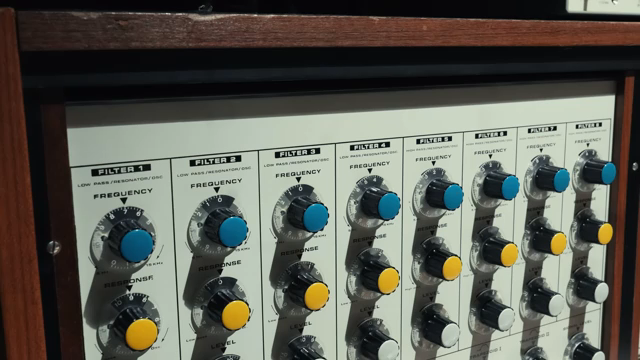
"So what is actually on a Synthi 100? What does it do? Well, let's do a guided tour."
© Screenshot/Quote: Alexballmusic (YouTube)
Sonic Ghosts and the Legacy of Rarity
The Synthi 100 is more than a machine; it is a vessel for sonic ghosts. Ball underscores its historical significance by tracing its use in the hands of the BBC Radiophonic Workshop, Pete Townshend, and modern artists like Daniel Miller and Richard D. James. Each user leaves a spectral imprint, their music echoing through the circuitry.
With only about thirty units ever made, the Synthi 100’s rarity amplifies its mythos. It is found more often in universities and specialist studios than in commercial spaces, its operation requiring both technical mastery and a willingness to embrace the unknown. The video becomes a meditation on legacy—how instruments like the Synthi 100 continue to shape new generations of sonic storytellers.
The Townshend Studio: Guardians of the Pulse
The narrative closes with a tribute to the Townshend Studio, a collaborative sanctuary where history is not just preserved but made accessible. Pete Townshend’s vision, in partnership with the University of West London, ensures that these magnetic relics are not locked away but placed in the hands of emerging musicians and researchers. The studio becomes a living archive, a place where the pulse of the past resonates into the future, inviting each visitor to become part of the ongoing story.
This article is also available in German. Read it here: https://synthmagazin.at/alex-ball-beleuchtet-den-ems-synthi-100-eine-nebelkammer-der-klanggeschichte/
Watch on YouTube:
Latest articles
Watch on YouTube:
Visit the channel:
https://www.youtube.com/AlexBallMusic
https://www.youtube.com/AlexBallMusic
Links from AlexBallMusic:
Patreon: https://patreon.com/AlexBallMusic
Bandcamp: https://alexball.bandcamp.com/releases
Instagram: https://instagram.com/alexballmusic
Facebook: https://facebook.com/alexballmusic
Alex Ball Music: https://alexballmusic.com
Sponsored links:
If you purchase via these links, we may earn a small commission – at no extra cost to you. The link opens an Amazon keyword search, and results may vary depending on availability.
EMS Synthi 100
🔗 Check price on Amazon
🔗 Check price on Amazon
Vocoder 5000
🔗 Check price on Amazon
🔗 Check price on Amazon