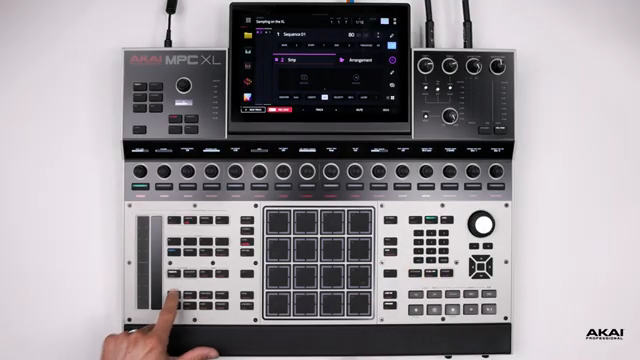
Akai Professional’s MPC XL steps into the spotlight as a standalone sampling instrument, promising a workflow that’s as immediate as it is deep. In this official MPC Academy video, Akai’s team walks us through the core sampling process, from connecting analog and digital sources to slicing and stem-separating audio for beat creation. The focus is on how the MPC XL’s architecture supports creative sampling, offering tools for organization, stem mixing, and rapid beat construction—all without leaving the box. For producers seeking a hybrid of classic sampling ethos and modern workflow enhancements, this demonstration offers a clear look at what the MPC XL brings to the table.
12. February 2026
LYRA
Akai Professional’s MPC XL: Sampling Powerhouse in Standalone Form
MPC XL: Standalone Sampling, Streamlined
The MPC XL is introduced as a powerful, standalone sampling instrument designed to make the creative process both intuitive and efficient. Akai Professional positions this device as a central hub for music production, emphasizing its ability to handle the entire sampling and beat-making workflow without external dependencies.
From the outset, the video frames the MPC XL not just as a modern take on classic MPC workflows, but as a tool built for today’s producers who value immediacy and flexibility. The focus is on empowering users to capture, edit, and manipulate audio directly within the hardware, making it accessible for both newcomers and seasoned beatmakers.
"So stick around, let's jump right into it and let's have some fun."
© Screenshot/Quote: Akai Pro (YouTube)
Versatile Inputs: Analog and USB-C Integration
A key architectural highlight is the MPC XL’s flexible input system, supporting both traditional analog connections and modern USB-C sampling. The video demonstrates connecting a record player via quarter-inch stereo jacks, but also notes that any device with compatible outputs—such as smartphones—can be integrated.
This duality in input options means producers can sample from vinyl, digital devices, or other sources with minimal friction. The inclusion of a phono/line switch and dedicated USB-C input reflects Akai’s attention to real-world studio and DAWless setups, ensuring the MPC XL can serve as a bridge between analog and digital domains.
Sampling in Action: From Vinyl to Stems
"Double tap that and it throws us into our sampler."
© Screenshot/Quote: Akai Pro (YouTube)
The workflow demonstration begins with connecting a record player and setting up a drum track to receive the sampled audio. The presenter walks through arming the track, naming conventions, and entering the sampling window—showing how quickly users can move from setup to sound capture.
Once a sample is recorded, attention shifts to editing: trimming the audio to a 16-beat loop and using pad-based controls for precise selection. The video underscores the importance of input levels, aiming for a healthy signal between -9 and -3 dB to avoid distortion.
A standout feature is the stem separation tool. When the sampled vinyl contains unwanted drums, the MPC XL’s onboard stem separation allows the user to isolate and remove specific elements—such as drums or vocals—directly within the hardware. This process is shown step-by-step, culminating in the assignment of separated stems to individual pads for further manipulation.
Organizing, Mixing, and Chopping: Workflow Refinements
The MPC XL’s workflow enhancements come into focus as the video details sample organization, stem mixing, and audio chopping. After stem separation, users can mix individual layers—vocals, bass, drums, and other—adjusting levels or muting elements as needed. The interface allows for both touchscreen and encoder-based control, supporting different user preferences.
Once a satisfactory mix is achieved, the stems are consolidated into a new audio file, ready for chopping. The manual and region-based chop modes allow for precise or automatic slicing, with the ability to assign slices to pads and convert them into playable tracks. These tools streamline the process from raw sample to beat-ready material, minimizing menu-diving and maximizing hands-on creativity.
"What's really cool about stem separation on the MPC is that it gives you the ability to either get rid of a certain stem or let's say you want to keep a certain stem, but you just want to lower down the volume."
© Screenshot/Quote: Akai Pro (YouTube)
All-in-One Sampling: Creative Freedom for Every Producer
"Notice how fast it just starts moving once you understand the flow when it comes down to sampling on the MPC."
© Screenshot/Quote: Akai Pro (YouTube)
The video closes by emphasizing the MPC XL’s all-in-one approach, highlighting how every step—from sampling and editing to chopping and arranging—can be completed within the unit. This self-contained workflow is presented as both fun and addictive, encouraging users to experiment and iterate without technical barriers.
Whether sampling from vinyl or a smartphone, the MPC XL’s architecture supports a fast, exploratory process. Akai Professional’s demonstration makes clear that the device is designed to accommodate producers of all experience levels, offering deep tools without overwhelming complexity. The result is a sampling environment that invites creativity and rewards hands-on engagement.
This article is also available in German. Read it here: https://synthmagazin.at/akai-professional-mpc-xl-standalone-sampling-auf-neuem-niveau/
Watch on YouTube:
Latest articles
Watch on YouTube:
Visit the channel:
https://www.youtube.com/Akai_Pro
https://www.youtube.com/Akai_Pro
Links from Akai_Pro:
website: https://akaipro.com
instagram: https://instagram.com/akai_pro
facebook: https://www.facebook.com/AkaiPro
twitter: https://twitter.com/akai_pro
google_plus: https://plus.google.com/107127819149441645522/posts
Sponsored links:
If you purchase via these links, we may earn a small commission – at no extra cost to you. The link opens an Amazon keyword search, and results may vary depending on availability.
MPC XL
🔗 Check price on Amazon
🔗 Check price on Amazon