Akai Professional’s MPC XL aims to be more than just another groovebox—it’s pitched here as the beating heart of a modern studio. In this focused walkthrough, the official Akai Pro team demonstrates how the MPC XL’s step sequencing, Q-Link controls, and CV tools elevate it from a mere sampler to a full production hub. We see the MPC XL handling drum programming, melodic sequencing, and automation with external synths, all while keeping workflow and hands-on control front and center. If you’re curious about how Akai’s latest flagship integrates with hardware and software setups, this video offers a precise, practical look—without drifting into marketing hyperbole.
28. January 2026
LYRA
Akai Professional MPC XL: Step Sequencing as Studio Centerpiece
MPC XL: The Studio’s Digital Nucleus
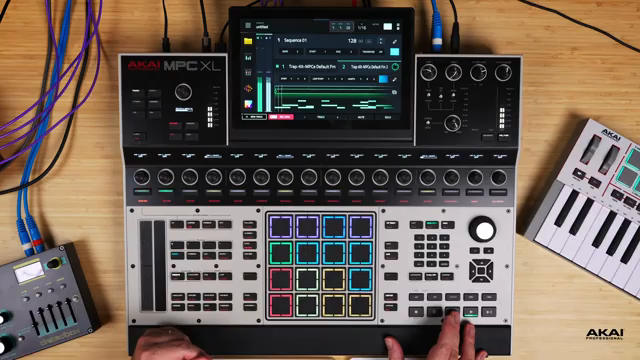
The video opens by framing the MPC XL as the central hub for a studio setup, building on the groundwork laid in the previous episode. The presenter references the prior creation of a template and integration of external synths like the Typhoon and Spectravonks, setting the stage for a workflow where the MPC XL orchestrates multiple devices.
This context positions the MPC XL not just as a beatmaker, but as a command center capable of managing various sound sources and tracking sessions. The emphasis is on continuity and scalability—this isn’t a one-off jam, but a system designed for evolving projects and complex routing.
Step Sequencing: Q-Links Take the Spotlight
Step sequencing on the MPC XL is given a significant upgrade through the use of its 16 Q-Link encoders. By entering the dedicated step sequencer mode via the Q-Links, users gain granular control over velocity and note articulation for each step, moving beyond the typical grid-based approach. This allows for nuanced programming, such as varying velocities for more dynamic drum patterns and the insertion of ghost notes with ease.
The workflow is tactile and immediate: turning a Q-Link adjusts velocity for a selected step, while the step sequencer interface remembers articulation and pad selection. This approach makes it possible to quickly build expressive patterns without diving into menus, and the video demonstrates how to navigate between bars and edit individual steps for further detail.
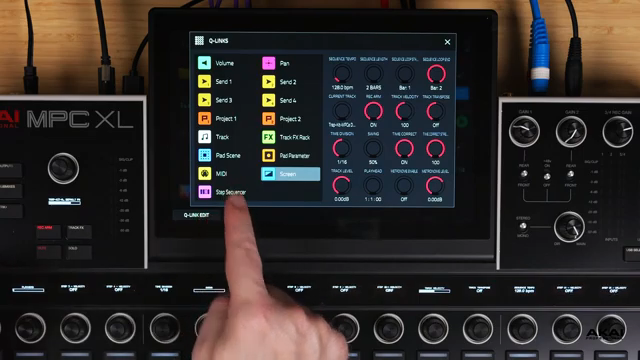
"So you tap step sequencer, and what this does is allows whatever you have selected for the drum pads, you can now turn a Q-link associated with the step to give it velocity and on and off and all that stuff."
© Screenshot/Quote: Akai Pro (YouTube)
External Synths and CV: Automation in Action
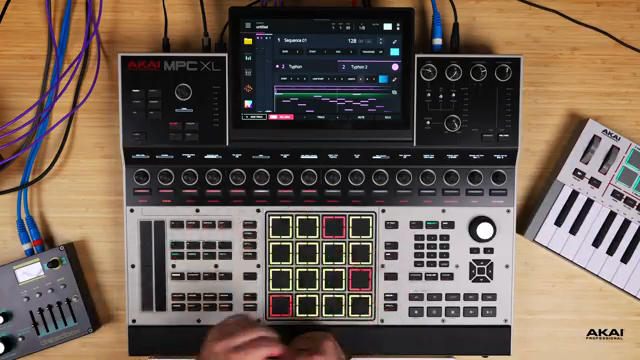
"Another thing that we could do is add automation into these tracks."
© Screenshot/Quote: Akai Pro (YouTube)
Integration with external synthesizers is a core strength highlighted here, with the MPC XL handling both sequencing and automation via its CV tools. The presenter demonstrates how to unmute and sequence external devices like the Spectravonks, adjusting clip length and time correction to suit melodic content. The note sequencing mode is particularly useful for melodic lines, displaying all notes in the grid and allowing for real-time input and editing.
Automation is introduced as a creative tool, with the ability to assign MIDI CCs—such as cutoff or wave shape—to individual steps. The system remembers parameter names and lets users dial in values per step, opening up possibilities for evolving sound design and modulation across sequences. This level of integration underscores the MPC XL’s ambition as a hybrid hardware–software brain for the studio.
Note Sequencing: Melodic Composition Unleashed
Switching from drum to note sequencing mode, the MPC XL reveals a workflow tailored for melodic composition. In this mode, the grid displays all active notes, making it easier to construct and edit melodic phrases. The presenter shows how to select steps, input notes, and adjust parameters like gate length, with the system responding fluidly to real-time changes.
Further, the video demonstrates how to address issues such as overlapping notes by using grid editing tools—selecting all, disabling snap, and adjusting note ends to prevent triggering problems. This hands-on approach to sequencing supports both creative experimentation and precise control, making the MPC XL a flexible tool for both beatmakers and melodic architects.
Looking Forward: Ableton Live Integration on the Horizon
The episode wraps up by teasing future content, specifically the integration of the MPC XL with Ableton Live. The presenter hints at the ability to trigger sound sources in Ableton and route them back into the standalone MPC XL hardware, suggesting a workflow that bridges hardware and DAW environments.
While this video focuses on standalone sequencing and hardware integration, the promise of seamless software connectivity is positioned as the next step. For those invested in hybrid setups, this upcoming demonstration will be key to understanding how the MPC XL can serve as a central node in both hardware and software-based production ecosystems.
This article is also available in German. Read it here: https://synthmagazin.at/akai-professional-mpc-xl-step-sequencing-als-studio-zentrale/
Watch on YouTube:
Latest articles
Watch on YouTube:
Visit the channel:
https://www.youtube.com/Akai_Pro
https://www.youtube.com/Akai_Pro
Links from Akai_Pro:
website: https://akaipro.com
instagram: https://instagram.com/akai_pro
facebook: https://www.facebook.com/AkaiPro
twitter: https://twitter.com/akai_pro
google_plus: https://plus.google.com/107127819149441645522/posts
Sponsored links:
If you purchase via these links, we may earn a small commission – at no extra cost to you. The link opens an Amazon keyword search, and results may vary depending on availability.
MPC XL
🔗 Check price on Amazon
🔗 Check price on Amazon
Spectravonks
🔗 Check price on Amazon
🔗 Check price on Amazon
Typhoon
🔗 Check price on Amazon
🔗 Check price on Amazon